
 Language
- No.101 Wanbo 1st Road, Nancun Town, Panyu District, Guangzhou, Guangdong, China
- 0086-020-84886013,84886093,84886091,84886012
- sales@finegosteel.com
- Complaints & Suggestions : suggest@finegosteel.com


Industry News
Why is submerged arc welding referred to as submerged in industrial piping?
Are you struggling with inconsistent weld quality in your heavy steel pipe procurement? Finding the right welding method is critical for ensuring structural integrity and safety in your construction projects, and dealing with pipe defects can destroy your project timeline and budget. Submerged arc welding is referred to as submerged because the electric arc burns beneath a deep layer of granular flux. This flux completely covers the molten weld pool, preventing atmospheric contamination and eliminating visible arc light, fumes, and spatter while ensuring deep penetration for heavy steel plates.
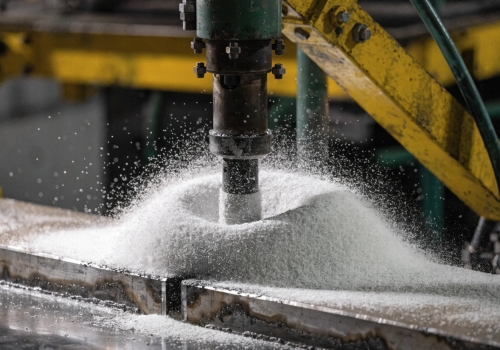
I know that understanding technical welding terms can be confusing when you are sourcing materials for a large project. You want to save costs without sacrificing quality. As a sourcing expert, I have seen too many projects fail because the purchasing team did not understand the manufacturing process. Let me explain the details of this process simply so you can make better purchasing decisions for your company.
How does the granular flux define the submerged process?
You might wonder how a simple powder can change the entire welding outcome. The secret lies in how this granular material interacts with the high-current electrical arc. The flux melts to form a liquid slag that protects the cooling weld metal. This is the main reason why is submerged arc welding referred to as submerged; the arc is never visible to the operator, allowing for higher currents and faster travel speeds without safety risks.
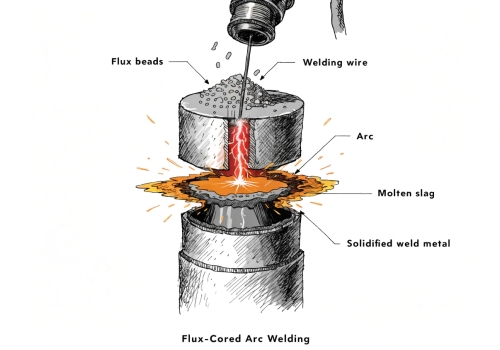
I want to dive deeper into this because the flux is the most important part of the system. In the factory at Finego Steel, we use this process daily. The word "submerged" is not just a name; it describes the physical state of the welding action. When we start the machine, a hopper drops a thick mound of granular flux in front of the welding wire. The arc strikes underneath this mound. To the naked eye, nothing seems to be happening except for the movement of the machine, but underneath that powder, intense heat is fusing the steel. This brings several benefits to the steel pipes we produce. First, because the arc is covered, there is no bright light to hurt the operator's eyes. This safety factor allows our team to monitor the process closely without fatigue. Second, the heavy layer of flux keeps the heat inside. This heat concentration allows the weld to go very deep into the thick steel plates we use for high-pressure pipes. Third, the flux acts as a cleaner. It pulls impurities like sulfur and oxygen out of the molten metal. When the weld cools, the melted flux turns into a hard crust called slag. We peel this off, and underneath, the weld is shiny and clean. If you are buying pipes for a sour service environment or a high-stress structural application, this flux action is vital. It adds alloying elements to the weld pool, making the joint as strong as, or stronger than, the base metal. Here is a simple breakdown of the flux functions:
| Function | Benefit for the Buyer |
|---|---|
| Atmospheric Shielding | Prevents rust and porosity, ensuring strong pipes that pass UT testing. |
| Heat Insulation | Slows cooling, making the metal tougher and less brittle in cold climates. |
| Arc Stabilization | Creates a smooth, consistent weld bead with no gaps or undercut. |
| Alloy Addition | Can add specific elements to improve corrosion resistance. |
At Finego Steel, we ensure our flux handling is perfect. This guarantees that the pipes you buy for your oil, gas, or construction projects have uniform strength throughout the entire length.
What equipment makes submerged arc welding suitable for heavy industry?
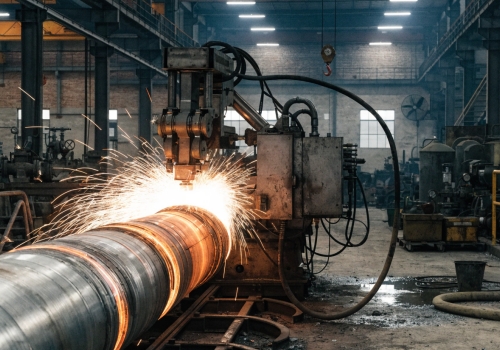
Buying steel pipes requires knowing how they were made to ensure they fit your project needs. The machinery used in this process determines the production capacity and the final delivery speed of your order. A sub-arc welder uses heavy-duty power sources, often exceeding 1000 amps, combined with automatic tractors or column booms. This setup drives the wire and flux, creating the continuous welds found on the large diameter pipes we supply at Finego Steel.
Is submerged arc welding the right choice for your construction projects?
Every welding method has strengths and weaknesses that affect your bottom line. You need to know if the benefits of SAW align with your project budget and timeline requirements. The primary benefit is the high deposition rate and deep penetration, which speeds up production for thick materials. However, it is limited to flat positions. Understanding why is submerged arc welding referred to as submerged helps explain its efficiency and its limitation to flat surfaces.
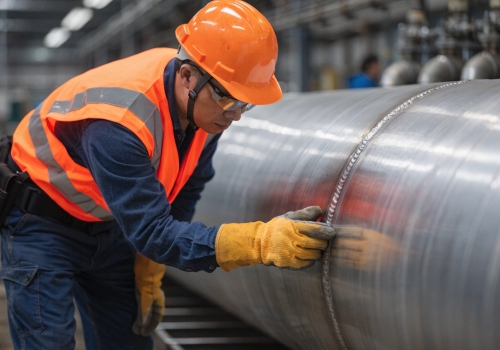
I want to be honest about the pros and cons so you can make the best choice. The biggest advantage of this method is speed. Because we use high current, we can put down a lot of weld metal quickly. We call this the "deposition rate." For thick steel plates used in piling or structural pipes, SAW is much faster than other methods like MIG or Stick welding. Faster production means lower costs for us, and we pass those savings to you. Another big plus is the quality. Because the flux covers the arc, there is no chance for wind or air to mess up the weld. The welds are very clean and smooth. They look good and pass X-ray tests easily. This minimizes the risk of repair work, which is a huge hidden cost in steel procurement. However, there are limitations. Because the flux is a loose powder, gravity pulls it down. This means we can only weld in a flat or horizontal position. We cannot weld upside down or vertically, or the flux would fall off. This is why is submerged arc welding referred to as submerged; it relies on gravity to keep the arc covered. But for pipe manufacturing, this is not a problem. We rotate the pipe so the welding head is always at the top, in the flat position. Here is a comparison for your reference:
| Feature | SAW (Finego Steel) | Manual Welding |
|---|---|---|
| Speed | Very High | Low |
| Skill Needed | Machine Operator | High Skilled Welder |
| Weld Appearance | Smooth, Uniform | Variable |
| Fumes/Smoke | Very Low | High |
| Position | Flat Only | All Positions |
For your construction projects, choosing SAW pipes means you get a product that is made fast, costs less, and has superior weld quality.
Conclusion
Submerged arc welding offers unmatched speed and quality for heavy industry. This is why at Finego Steel, we utilize this specific technology to manufacture our two flagship products: LSAW pipe (Longitudinal Submerged Arc Welding) for high-pressure heavy-wall applications, and SSAW pipe (Spiral Submerged Arc Welding) for cost-effective, long-distance transmission.
- No.101 Wanbo 1st Road, Nancun Town, Panyu District, Guangzhou, Guangdong, China
- 0086-020-84886013,84886093,84886091,84886012
- sales@finegosteel.com