
 Language
- No.101 Wanbo 1st Road, Nancun Town, Panyu District, Guangzhou, Guangdong, China
- 0086-020-84886013,84886093,84886091,84886012
- sales@finegosteel.com
- Complaints & Suggestions : suggest@finegosteel.com


Product News
What Makes ASTM A53 Seamless Pipe the Go-To Choice for Your Project?
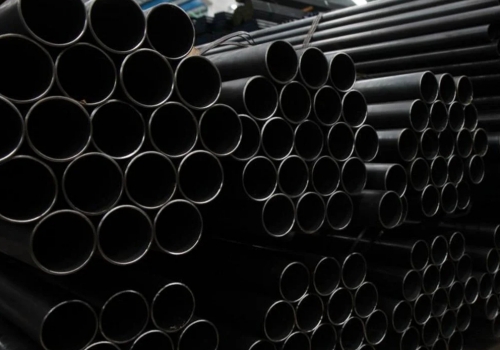
Struggling to find a reliable, versatile pipe? The wrong choice can lead to project delays and budget overruns. ASTM A53 seamless pipe offers a proven, cost-effective solution. ASTM A53 seamless pipe is a carbon steel pipe made without a weld, following the ASTM A53 standard. It's ideal for low-to-medium pressure fluid transport and structural uses due to its excellent strength, uniformity, and affordability. It's a workhorse in many industries.
So, you know what it is. But how do you know if it's the right fit for your specific needs? As a purchasing manager, you need more than a simple definition. You need to understand the details that impact performance, budget, and project success. Let's break down the details that really matter for a professional like you.
What Are the Key Specifications You Must Know?
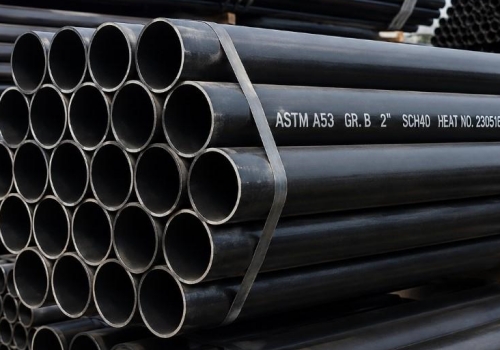
Confused by technical jargon like 'Grade B' or 'Schedule 40'? Misinterpreting these specs can lead to ordering the wrong material, a costly mistake for any project. The most common specification is ASTM A53 Grade B, Type S (seamless), Schedule 40. Grade B offers higher tensile and yield strength than Grade A. Schedule 40 defines a standard wall thickness, balancing pressure capacity and cost, making it the default for many general applications.
When you're sourcing pipes, the specifications are everything. They tell you the material's capabilities and limitations. Let's dive deeper into what these terms actually mean for you.
Understanding the Grades
ASTM A53 standard has two main grades: A and B. Grade B is much more common. The reason is simple: it's stronger. Grade B has a minimum tensile strength of 60,000 psi (415 MPa) and a minimum yield strength of 35,000 psi (240 MPa). This makes it more robust for structural and pressure applications. Grade A is weaker and typically used for lower-pressure or less critical jobs. For almost all EPC projects, Grade B is the standard choice.
Decoding the Types
The standard also lists different manufacturing types. Type S is for seamless, Type E is for electric-resistance welded, and Type F is for furnace-butt welded. For any application involving pressure, Type S (seamless) is the superior choice. Since it's made from a solid billet of steel with no weld seam, it has uniform strength around its entire circumference. This eliminates the weak point that a weld can sometimes represent. This is a critical detail that ensures system integrity and safety. I remember a project in Turkey where the client was building a large commercial complex. They initially specified a different pipe but were facing budget constraints. We at Finego Steel walked them through the specs of an astm a53 seamless pipe. We showed them how its Grade B pressure rating and structural integrity were more than sufficient for their HVAC and fire sprinkler systems. This simple change saved them nearly 15% on material costs. It's about finding the right solution, not just the most expensive one.
How Does ASTM A53 Compare to ASTM A106?
Choosing between A53 and A106 pipes can be tricky. A wrong decision could compromise safety in high-temperature environments or lead to overspending on your project. The key difference is temperature. ASTM A53 is for general, ambient temperature use in fluid and structural applications. ASTM A106 is specifically designed for high-temperature, high-pressure service, like steam lines. Using A53 in a high-temp scenario is a serious mistake.
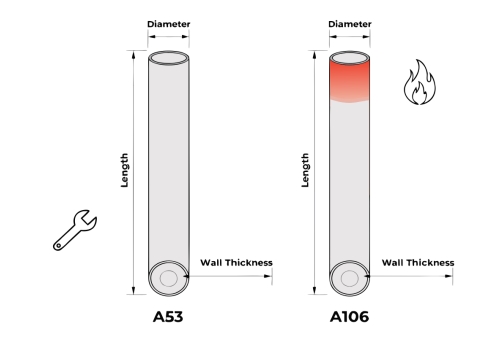
As a purchasing manager, you are often presented with choices. A53 and A106 are two of the most common carbon steel seamless pipes, but they are not interchangeable. Knowing the difference is crucial for both safety and budget management. Their applications are very distinct.
Head-to-Head Comparison
The best way to see the difference is to put them side-by-side. Here’s a simple table to clarify their main distinctions:
| Feature | ASTM A53 | ASTM A106 |
|---|---|---|
| Primary Application | General fluid, gas, and structural use | High-temperature and high-pressure service |
| Temperature Range | Low to medium temperatures | Suitable for high-temperature applications |
| Manufacturing Type | Can be Seamless (Type S) or Welded (Type E) | Must be Seamless |
| Chemical Composition | Standard carbon steel | Stricter control, includes silicon (min 0.10%) |
| Cost-Effectiveness | More economical for general-purpose use |
More expensive due to materials and process |
The most important takeaway is that A106 is engineered for heat. The added silicon in its chemical makeup helps it maintain strength at high temperatures. A53 does not have this requirement. Therefore, for pipelines in power plants, refineries, or any system carrying high-temperature fluids like steam, A106 is the only safe choice. For most construction projects—like water lines, fire protection systems, and structural supports—ASTM A53 is the perfect, more cost-effective option.
What Practical Details Affect Your Purchase Order?
Are you considering factors like surface finish or precise dimensions? Overlooking these details can cause installation problems on-site and lead to unexpected costs or delays. Key practical details include dimensions (NPS, OD, Wall Thickness), weight for logistics, and surface finish (black vs. galvanized). Black pipe is standard, while galvanized offers corrosion resistance for outdoor or wet applications. Always verify these details on your purchase order. The technical specs are important, but so are the practical details. Getting these right on your purchase order is just as critical as choosing the right grade. It's what ensures the material that arrives on-site is exactly what your engineers and installation teams are expecting.
Dimensions and Weights
Understanding pipe dimensions can be tricky. Nominal Pipe Size (NPS) is a North American standard for pipe sizes. It's important to remember that for NPS 12 and under, the NPS number is not the same as the Outside Diameter (OD). For example, a 6" NPS pipe has an OD of 6.625 inches (168.3 mm). Always confirm the OD, wall thickness (defined by the "Schedule"), and length. These figures also determine the weight, which is critical for calculating shipping costs and planning for on-site handling. Here are some common examples for Schedule 40:
| Nominal Pipe Size (NPS) | Outside Diameter (mm) | Wall Thickness (mm) | Weight (kg/m) |
|---|---|---|---|
| 2" | 60.3 | 3.91 | 5.44 |
| 4" | 114.3 | 6.02 | 16.07 |
| 6" | 168.3 | 7.11 | 28.26 |
| 8" | 219.1 | 8.18 | 42.55 |
Surface Finish Choices
The final detail is the finish. For your astm a53 seamless pipe, you usually have two choices.
1.Black Pipe: This is the standard finish. It's not bare steel; it has a dark iron-oxide coating from the manufacturing process and often a thin protective lacquer. It's perfect for most applications, like natural gas lines or fire sprinkler systems.
2.Hot-Dip Galvanized Pipe: For this finish, the pipe is dipped in molten zinc. This creates a durable, corrosion-resistant coating on the inside and outside. It’s the right choice for drinking water lines, outdoor handrails, or any application where the pipe will be exposed to moisture. It does cost more, but it saves on long-term maintenance. At Finego Steel, we always double-check these details. For a recent infrastructure project in Istanbul, we worked with the EPC's purchasing manager. They needed galvanized A53 pipe for an exposed water main. We ensured the zinc coating thickness met their stringent local standards and coordinated the logistics based on precise weight calculations to avoid any surprises at the port. This level of detail prevents costly delays.
Conclusion
Choosing the right astm a53 seamless pipe means matching specs to your application. Understanding grades, schedules, and finishes ensures you get the performance and value your project demands.
- No.101 Wanbo 1st Road, Nancun Town, Panyu District, Guangzhou, Guangdong, China
- 0086-020-84886013,84886093,84886091,84886012
- sales@finegosteel.com