
 Language
- No.101 Wanbo 1st Road, Nancun Town, Panyu District, Guangzhou, Guangdong, China
- 0086-020-84886013,84886093,84886091,84886012
- sales@finegosteel.com
- Complaints & Suggestions : suggest@finegosteel.com


Product News
Is It Better to Use LSAW Pipe Piles for Deep Marine Foundations?
Are you worried about structural cracking or weld failure when driving heavy-wall steel pipes into deep ocean beds? Traditional piling options often fail under constant wave shear and cyclic hydraulic hammer loads.
If you choose the wrong welding method, your marine foundation faces rapid fatigue, microcracks, and costly structural delays during on-site splicing.
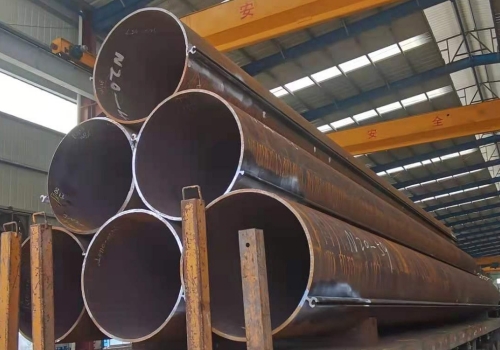
I solved these challenges by upgrading our project pipelines to heavy-wall longitudinal submerged arc welded pipes. This choice balances cost, thick-wall precision, and structural integrity under extreme driving stress.
Why Do Deep Marine Foundations Rely on LSAW Rather Than Spiral Pipes?
Are you struggling to choose between longitudinal and spiral weld configurations for high-stress driving applications? Heavy driving impacts often cause traditional spiral pipes to split or deform along diagonal weld lines.
Our engineering partners frequently ask why straight-seam pipes perform better under continuous vertical stress. Spiral welds concentrate shear stress along a helical path, which increases cracking risks at the weld toes during repeated heavy hammering.
Structural Performance Under Extreme Driving Loads
I saw this clearly during our recent negotiation with an Australian marine engineering client. They needed heavy piling for an offshore wharf and were worried about weld failure. I showed them how our Finego Steel brand utilizes the advanced JCOE forming process to eliminate these issues.
The JCOE method uses incremental, multi-step cold pressing to form thick steel plates step by step. This process reduces remaining internal stress and ensures a perfectly straight longitudinal weld parallel to the central axis. Because vertical impact forces distribute evenly along the straight wall, there is no diagonal stress concentration to cause failure.
Comparing Welded Pipe Configurations for Heavy Piling
| Pipe Production Type | Weld Stress Distribution | Maximum Wall Thickness | Shape Tolerance Precision | Offshore Piling Suitability |
|---|---|---|---|---|
| LSAW (JCOE Process) | Evenly distributed along the central axis; no diagonal stress concentration. | Up to 60 mm or more. | High precision; ellipticity ≤ 0.6%, straightness < 1 mm/m. | Excellent (Best for deep-water and heavy-impact driving) |
| SSAW (Spiral Welded) | Concentrates along helical seams; higher risk of weld toe cracking. | Generally limited for extra-heavy walls. | Moderate; higher residual forming stress. | Poor (High risk of failure under heavy hydraulic hammers) |
| ERW (Electric Welded) | Straight seam; limited by high-frequency welding thickness constraints. | Usually under 20 mm. | High precision but thin walls. | Unsuitable (Cannot meet heavy-wall structural needs) |
Overcoming On-Site Splicing Delays
When you splice pile segments together on a rocking offshore barge, size mismatch is your worst enemy. If the pipe ends are out-of-round, your welding team will spend hours correcting alignment errors, creating weak joints that are vulnerable to marine corrosion.
Our JCOE line solves this by applying mechanical cold expansion after forming to calibrate geometric tolerances. We maintain a tight out-of-roundness tolerance of ≤ 0.6% and straightness below 1 mm per meter. When our Australian clients received these lsaw pipe piles, the consistent end matching completely eliminated their on-site splicing delays.
How Does ASTM A252 Grade 3 Chemistry Prevent Fatigue Failures?
Are you sure your thick-walled piling pipes can survive thousands of high-energy hydraulic hammer blows without buckling or cracking? Standard carbon steel often becomes brittle during high-temperature welding, leading to catastrophic under-water cracking.
The secret to preventing brittle fractures lies in controlling the actual yield strength and the exact chemical composition of the weld heat-affected zone.
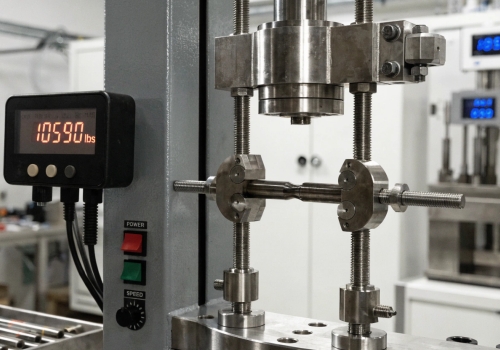
Managing Yield Strength Under Heavy Impacts
Under the ASTM A252 standard, Grade 3 requires a minimum yield strength of 310 MPa and a minimum tensile strength of 455 MPa. However, the standard does not enforce rigid alloy chemical limits, leaving full material control to the manufacturer.
If a supplier only meets the basic standard, the steel pipe may suffer from an unbalanced Carbon Equivalent (Ceq). High-energy diesel hammers transmit violent mechanical shock waves through the pile; if the steel lacks sufficient low-temperature toughness, microcracks will initiate in the weld zones and propagate over time.
Chemical Composition Tuning for Field Welding
Carbon Equivalent Optimization
To prevent cold cracking during both factory production and field splicing, I specify that the Ceq of our offshore piling steel must remain below 0.42. We carefully balance carbon, manganese, and trace alloying elements to maintain excellent ductility after high-temperature welding cycles.
Advanced Quality Control Workflows
Our production facility deploys both online and offline ultrasonic testing alongside X-ray digital flaw detection. These NDT inspection steps check the internal compactness of the full penetration weld to ensure zero internal voids or inclusions. We perform strict batch tensile and cold bending tests to ensure every batch of lsaw pipe piles complies with the highest project requirements.
Which Coating System Provides the Best Marine Anti-Corrosion Protection?
Are you unsure whether to specify 3LPE or 3LPP coating to protect your seabed steel structures from aggressive saltwater degradation? Choosing the wrong outer polymer layer can lead to severe coating delamination when the pile scrapes against seabed gravel.
A single universal coating cannot protect a pipe across all marine levels, because corrosion dynamics change completely from the splash zone down to the sub-mudline.
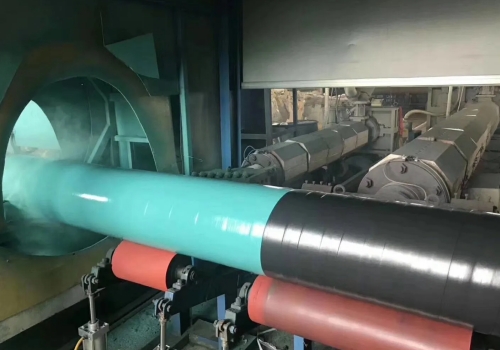
Analyzing Multi-Zone Marine Corrosion Threats
Marine piles cross four distinct environmental zones. The atmospheric zone faces salt-laden winds and UV radiation. The splash zone experiences alternating wetting and drying, which causes the fastest corrosion rates.
The submerged zone suffers from continuous chloride ion penetration, while the sub-mudline zone subjects the steel to extreme abrasive friction during driving, anaerobic microbial attacks, and cathodic disbondment risks. To combat these varied threats, we operate five dedicated anti-corrosion coating lines to apply customized, multi-layered packages.
Coating Comparison: 3LPE vs. 3LPP
3LPE (Three-Layer Polyethylene)
This system utilizes a high-density polyethylene outer layer over a fusion-bonded epoxy (FBE) primer. It provides excellent chemical resistance and cost-effective protection for shallow-water splash and submerged zones. However, its moderate surface hardness makes it vulnerable to deep scratching if driven into hard, rocky sea floors.
3LPP (Three-Layer Polypropylene)
This system features a polypropylene top coat that offers much higher hardness, superior abrasion resistance, and thermal stability up to 90 °C. Its dense polymer matrix resists cathodic disbondment far better when the lsaw pipe piles scrape against hard rock, gravel, or compacted silt during installation. For deep offshore engineering foundations, 3LPP is the ideal choice to prevent coating failure.
FBE Primer Adhesion Foundational Control
No matter which top coat you select, the foundational layer must be a premium FBE primer bonded directly to a blast-cleaned steel substrate. Our coating process strictly controls the surface blast profile and curing temperature. This chemical bond prevents delamination between the steel and the outer polymer layers, ensuring your foundation remains protected for a 50-to-100-year design life.
Conclusion
Using high-precision engineering technology for thick-walled steel piling is essential to ensure long-term marine foundation safety. Our advanced JCOE and double-sided LSAW processes eliminate weld stress concentration, prevent driving fatigue failures, and guarantee precise geometric sizing for seamless on-site splicing. By combining optimized ASTM A252 Grade 3 metallurgy with customized 3LPP or 3LPE anti-corrosion coatings, Finego Steel delivers reliable, high-performance piping solutions that withstand the harshest global offshore environments.
- No.101 Wanbo 1st Road, Nancun Town, Panyu District, Guangzhou, Guangdong, China
- 0086-020-84886013,84886093,84886091,84886012
- sales@finegosteel.com