
 Language
- No.101 Wanbo 1st Road, Nancun Town, Panyu District, Guangzhou, Guangdong, China
- 0086-020-84886013,84886093,84886091,84886012
- sales@finegosteel.com
- Complaints & Suggestions : suggest@finegosteel.com


Product News
What is the Ultimate Guide to Choosing the Right Bend Pipe?
Date:2026-07-07
Routing pipelines through tight spaces is hard. A wrong turn can cause pressure drops or leaks. You need a reliable bend pipe to keep your fluids moving smoothly. A bend pipe changes the direction of fluid flow in a pipeline system. It minimizes pressure loss and fits perfectly into complex layouts. You can use standard welding or flanges to connect it. It is cost-effective and essential for handling liquids, gases, or heavy slurries.
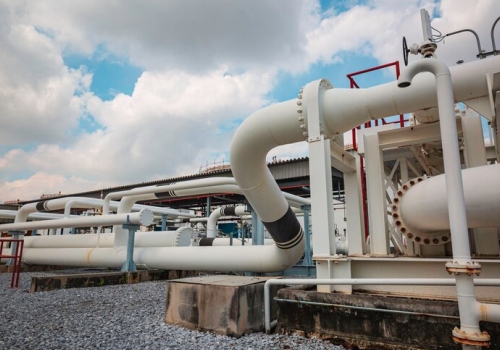
You might think any curved pipe will do the job. But if you pick the wrong bending method or size, you will face big problems during installation. Let us stop guessing and look closer at how to make the right choice.
Why Do Pipeline Systems Rely on the Bend Pipe?
Sharp corners in pipelines create friction. This friction slows down the flow and wastes energy. A bend pipe solves this by guiding fluids gently around obstacles. Using a bend pipe reduces pressure changes in your system. It keeps the pipe ends intact for easy welding or flanging. It handles hot liquids and high-viscosity slurries very well. This makes it a smart and cheap way to build a safe, long-lasting pipeline network.
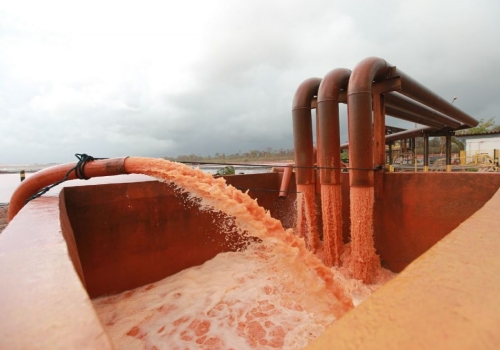
When I started buying materials for big construction sites 18 years ago, I did not understand why engineers insisted on custom bends. I thought standard 90-degree elbows were enough. Then, I worked on a massive water treatment plant in Brazil. The standard elbows caused too much pressure drop. The pumps had to work too hard, and the costs went up. That is when I learned the real value of a bend pipe.
How Bends Protect Your System
A bend pipe creates a smooth path. It does not force the fluid to hit a sharp wall. This smooth path reduces wear and tear on the inner walls. It is very important when you move sand, oil, or thick chemicals. At Finego Steel, we supply pipeline products to many projects across the Americas. We see how a good bend pipe extends the life of the whole system.
Cost and Space Benefits
You also save money. You do not need to buy many small fittings to make a complex turn. One good bend pipe can do the work of three fittings. It takes up less space and requires fewer welds. Fewer welds mean fewer chances for leaks.
How Do Factories Shape the Bend Pipe?
Bending hard metal is not easy. If you use the wrong force, the pipe will crack or flatten. You must know the right bending methods to avoid weak pipes. Factories use two main ways to shape a bend pipe: cold bending and hot bending. Cold bending uses physical force and tools like mandrels to shape thin pipes. Hot bending uses induction heating to shape thick, large pipes with very little physical force and no internal supports. I have visited many production lines at Finego Steel. I love watching straight steel tubes turn into perfectly curved shapes. It is like magic, but it is pure science. We must choose the right method based on the pipe's thickness and radius. Let us break down the methods.
Cold Bending Techniques
Cold bending is great for small or thin pipes. We use machines to pull or push the metal. Sometimes we put a mandrel inside the pipe. The mandrel stops the pipe from collapsing.
Hot Bending Techniques
For heavy construction, we usually use hot induction bending. The machine heats a small ring around the pipe. Then it slowly pushes the pipe to bend it. This is my favorite method. I remember sourcing hot-bent pipes for a huge oil pipeline in Mexico. The hot bending kept the metal strong without any filler. The outer wall gets a little thinner, and the inner wall gets thicker, but the quality is top-notch.
| Bending Method | Best For | Main Benefit |
|---|---|---|
| Rotary Draw (Cold) | Small, thin pipes | Very precise angles |
| Roll Bending (Cold) | Large radius curves | Good for structural shapes |
| Induction (Hot) | Large diameter, thick walls | High strength, no mandrel needed |
How Do You Measure a Bend Pipe?
Ordering the wrong size pipe delays your project. If the radius is off, the pipe will not fit the space. Understanding pipe measurements prevents these expensive mistakes. You measure a bend pipe using its nominal diameter (D). A short radius bend equals 1D. A long radius bend is usually 1.5D or more. To find the centerline radius, multiply the D number by the pipe diameter. The straight ends stay unchanged for easy connecting.
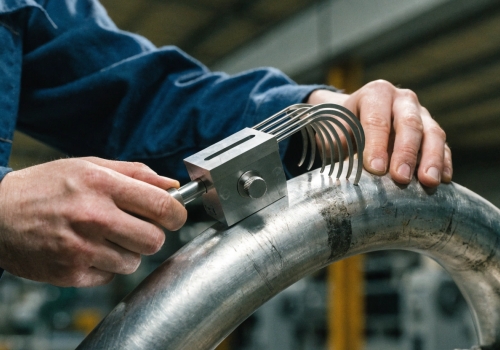
Sizing a bend pipe used to give me headaches. I would look at the blueprints and see numbers like 3D or 5D. Early in my career, I ordered a batch of 1.5D elbows for a tight basement project in Peru. They did not fit. The space required a 1D short radius bend. I had to reorder everything. This mistake cost us a lot of time and money.
The "D" Measurement System
The "D" tells you how sharp the curve is. It is a simple math formula. If you have a 10-inch pipe and you want a 5D bend, you multiply 10 by 5. The centerline radius is 50 inches. This radius tells you exactly how much room the bend will take up in your facility.
180-Degree Bends
When you need the pipe to turn completely around, you use a 180-degree bend. We measure these from the center of one opening to the center of the other. A 4-inch pipe with a 2D short radius has an 8-inch center-to-center distance. At Finego Steel, we make sure the tangent ends—the straight parts at the ends of the bend—match your existing flanges or valves perfectly.
What Materials Can You Use for a Bend Pipe?
Corrosive fluids will eat through weak metals. If you pick the wrong material, your pipe will fail quickly. You need strong materials that can survive the bending process. You can bend many types of metals. The most common materials for a bend pipe include carbon steel, stainless steel, aluminum, copper, and nickel alloys. Induction bending works best for hard metals because the heat makes them soft enough to shape without breaking or wrinkling. You cannot just bend any metal and expect it to hold pressure. Every material reacts differently to force and heat. I spend a lot of time talking to our production team at Finego Steel to ensure we match the material to the client's needs. We ship a lot of stainless steel bends to coastal projects in Chile and the United States because they resist salt water corrosion.
Ferrous vs. Non-Ferrous Metals
Steel and steel alloys are ferrous metals. They are strong and cheap. We use them for most building and pipeline projects. Non-ferrous metals like aluminum and copper are lighter and resist rust, but they are softer.
Material Selection Guide
When you choose a material, think about what will flow through the bend pipe.
· Stainless Steel: Perfect for food processing or highly corrosive chemicals.
· Nickel Alloys: Used in extreme high-temperature environments. Because induction bending requires less physical force, we can safely bend very hard or very thin metals without warping them.
What Are the Most Frequently Asked Questions About the Bend Pipe?
Searching for pipeline answers takes too much time. Conflicting information leaves you confused. Here are the clear, direct answers you need to finalize your pipeline design. Buyers often ask about the difference between elbows and bends, the best methods for large pipes, and connection types. Bends offer custom radiuses, while elbows are standard. Induction bending is best for large pipes. You can connect a bend pipe using welds, flanges, or threaded fittings easily. Over my 18 years in the construction industry, I have answered hundreds of questions about sourcing pipeline materials. At Finego Steel, we believe in clear communication. Here are the questions my clients in the Americas ask me the most.
Q: What is the main difference between an elbow and a bend pipe?
A: An elbow is a standard factory fitting, usually 45 or 90 degrees, with a fixed short or long radius. A bend pipe is custom-made from a straight pipe. It can have any angle and a much larger radius, like 3D, 5D, or even 10D.
Q: Does bending weaken the pipe?
A: If done wrong, yes. But with proper induction bending, the metal's grain structure remains strong. The outer wall gets slightly thinner, but we account for this by using pipes with the correct starting thickness.
Q: Can you bend pipes with seams (ERW)?
A: Yes, we can. But seamless pipes are generally better for high-pressure systems. If we bend an ERW pipe, we place the seam in a neutral zone so it does not face maximum stress during the bend.
Conclusion
A bend pipe is vital for smooth, safe pipeline routing. By choosing the right bending method, size, and material, you can build a strong system that lasts for years.
- No.101 Wanbo 1st Road, Nancun Town, Panyu District, Guangzhou, Guangdong, China
- 0086-020-84886013,84886093,84886091,84886012
- sales@finegosteel.com
We use cookies and other tracking technologies to improve your browsing experience on our website, to show you personalized content and targeted ads, to analyze our website traffic, and to understand where our visitors are coming from,This behavior is in compliance with the user consent policy.