
 Language
- No.101 Wanbo 1st Road, Nancun Town, Panyu District, Guangzhou, Guangdong, China
- 0086-020-84886013,84886093,84886091,84886012
- sales@finegosteel.com
- Complaints & Suggestions : suggest@finegosteel.com


Product News
What are the essential things to know about industrial pipe elbows?
Pipe systems often fail at weak joints. You face leaks and costly project downtime. I will show you how to choose the best fittings to stop these problems. Industrial pipe elbows are vital fittings. They change the fluid direction in your pipeline. They connect two pipes with the same or different diameters. You can find them in 45-degree, 90-degree, and 180-degree angles. They keep your piping system running smoothly and safely.
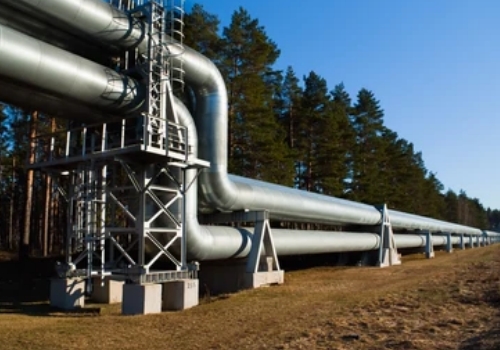
You might think any simple bend will work for your current piping project. But choosing the wrong fitting will quickly ruin your entire system and destroy your budget.
How do butt weld elbows improve your main piping system?
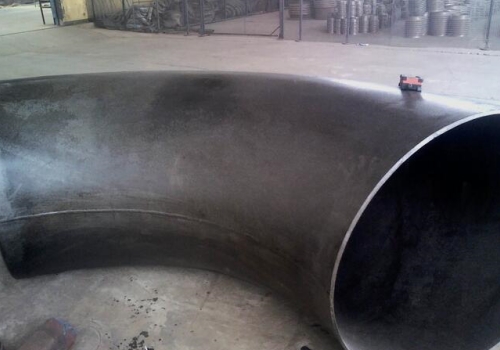
Welding large pipes costs a lot of money. Poor joints cause bad pressure drops. You need strong butt weld elbows for secure and smooth fluid flow. Butt weld industrial pipe elbows connect steel pipes using a butt welding process. Factories make them by hot pushing or hot heating. They include seamless and welded types. You can use them for sizes from NPS 1/2 to 48. They provide very strong and leak-proof joints.
Understanding Angles and Radius
I often talk to EPC purchasing managers. I know you want to save costs and get high-quality products. Butt weld elbows are perfect for large construction projects. They come in different angles. The 90-degree elbow changes the fluid direction by 90 degrees. It has two types. The long radius (LR) elbow has a bending radius of 1.5 times the outside diameter. The short radius (SR) elbow has a bending radius equal to the outside diameter. The 45-degree elbow only has a long radius type. We also supply 180-degree elbows. They send the fluid back in the opposite direction.
Real Project Experience
I remember a big pipeline project in the Americas last year. An EPC company needed thousands of butt weld elbows. They needed standard thickness and extra strong thickness. Our team at Finego Steel supplied them quickly. We integrated the production and inventory perfectly. The client saved a lot of time. Here is a size chart for butt weld elbows.
| Nominal Size (NPS) | Outside Diameter (mm) | Center to End 90° LR (mm) | Center to End 45° LR (mm) |
|---|---|---|---|
| 1/2 | 21.3 | 38 | 16 |
| 1 | 33.4 | 38 | 22 |
| 2 | 60.3 | 76 | 35 |
| 4 | 114.3 | 152 | 64 |
| 8 | 219.1 | 305 | 127 |
| 12 | 323.8 | 457 | 190 |
Why should you choose socket weld and threaded elbows for small pipes?
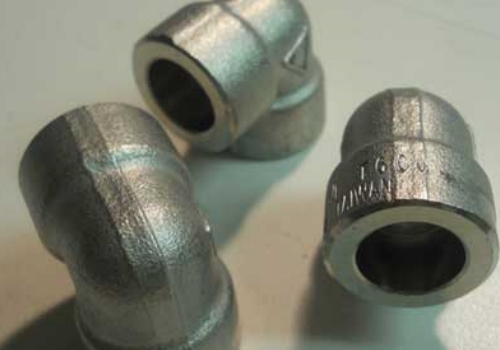
Small diameter pipes are very hard to weld. Bad threads lead to weak connections. You need precise socket weld and threaded elbows to prevent small leaks. Socket weld elbows need you to insert a pipe into a recessed area before welding. Threaded elbows connect pipes using screw threads like NPT. They are forged steel fittings. We mainly use them for small bore piping under NPS 4. They handle very high pressures.
Safe Connections for Small Bore Pipes
Small pipes require careful work. Socket weld elbows and threaded elbows are the best choices here. Socket welding creates a very tight seal. It stops fluid from leaking out. Threaded elbows are easy to install. Workers just screw them together. You do not need hot welding on the site. This saves installation time.
High Pressure Solutions
These small fittings are very strong. You can buy them in 2000LB, 3000LB, 6000LB, and 9000LB pressure classes. I worked with a client in Southeast Asia recently. They built a new urban pipeline network. They needed reliable threaded elbows for the small water lines. They wanted to avoid welding in crowded areas. Finego Steel delivered heavy-duty 3000LB threaded elbows to their site. The project finished early.
| Nominal Size (NPS) | Threaded Elbow 3000LB Center to End (mm) | Socket Weld 3000LB Depth of Socket (mm) |
|---|---|---|
| 1/2 | 33 | 10 |
| 3/4 | 38 | 13 |
| 1 | 44 | 13 |
| 2 | 64 | 16 |
I always recommend checking the wall thickness. Good wall thickness ensures the pipe handles the water pressure safely.
What materials make the best industrial pipe elbows for harsh environments?
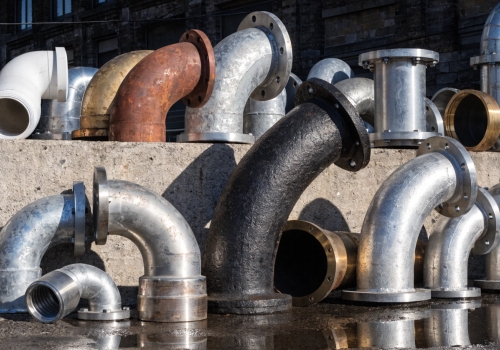
Corrosive fluids destroy weak metals very fast. Replacing rusted fittings stops your daily production. You must pick the exact right steel grade to protect your system. Industrial pipe elbows use many different strong materials. Carbon steel works best for standard use. Stainless steel prevents rust in wet places. Alloy steel handles very high temperatures. Duplex steel offers the ultimate strength. The right material makes your pipeline last a long time.
Choosing the Right Steel Grade
Material choice is a critical step. A wrong material will break your pipeline. Carbon steel elbows use ASTM A234 WPB. They are cheap and strong. Stainless steel elbows use ASTM A403 WP304 or WP316. They cost more money. But they resist acid and salt. Alloy steel uses ASTM A234 WP11 or WP22. They work great in hot power plants.
Difference Between Elbows and Bends
Some engineers confuse elbows and pipe bends. An elbow is a standard pipe fitting. A pipe bend is a custom piece. Bends have a much larger radius than elbows. We make both at Finego Steel.
Supporting Global Projects
I want to share a story from Africa. An EPC company built an oil exploration site there. They faced extreme weather and harsh oil fluids. They needed high-quality SSAW pipes and duplex steel industrial pipe elbows. They struggled to find a one-stop supplier. Finego Steel solved their problem. We supplied all pipes and fittings together. We saved them a lot of shipping costs.
| Material Type | Common ASTM Grades | Best Application |
|---|---|---|
| Carbon Steel | A105, A234 WPB | General construction, water lines |
| Stainless Steel | A182 F304, A403 WP316 | Corrosive fluids, food industry |
| Alloy Steel | A182 F11, A234 WP22 | High temperature, power plants |
| Duplex Steel | A182 F51, A815 S31803 | Harsh offshore oil rigs |
Conclusion
Choosing the right industrial pipe elbows ensures safety and saves costs. Finego Steel provides top-quality fittings for your global projects. Contact us for one-stop pipeline solutions today.
- No.101 Wanbo 1st Road, Nancun Town, Panyu District, Guangzhou, Guangdong, China
- 0086-020-84886013,84886093,84886091,84886012
- sales@finegosteel.com