
 Language
- No.101 Wanbo 1st Road, Nancun Town, Panyu District, Guangzhou, Guangdong, China
- 0086-020-84886013,84886093,84886091,84886012
- sales@finegosteel.com
- Complaints & Suggestions : suggest@finegosteel.com


Product News
Is a Hot Rolled Steel Pipe the Right Choice for Your Heavy-Duty Projects?
You face tight budgets and strict safety requirements on every project. Do you struggle to find a piping solution that balances extreme durability with a reasonable cost? A hot rolled steel pipe is the ideal solution for high-pressure systems and heavy structural applications. It offers superior strength because it lacks welds, costs less than cold-drawn options, and handles high temperatures effectively, making it perfect for your construction and industrial needs.
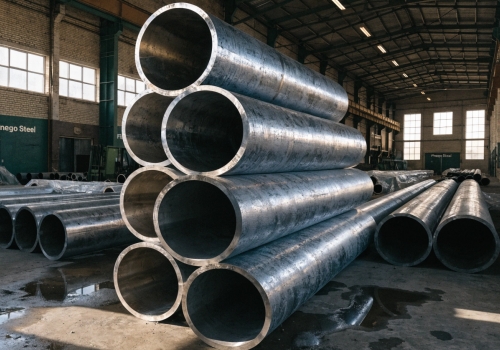
I know that sourcing the right materials is a difficult task. I understand the pressure you feel to get it right. I want to help you understand this product better. I will explain the details in the following sections.
Why Should You Prioritize Hot Rolled Steel Pipes for High-Pressure Jobs?
Pipeline failures cause massive delays and serious safety hazards for your team. You cannot afford weak links or burst pipes in your critical infrastructure projects. These pipes have no welds, which means they have uniform strength in all directions. They resist high pressure better than welded pipes. The hot rolling process also refines the grain structure, making the steel tougher and safer for power plants and petrochemical use.
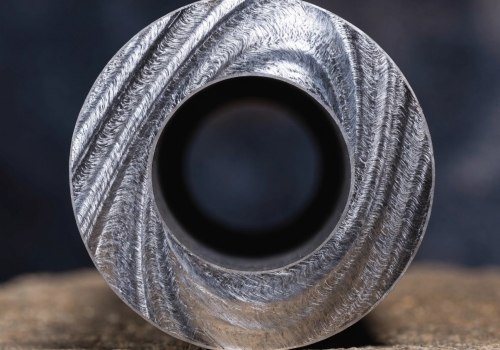
I have worked with many clients at Finego Steel since 1996. I often see engineers worry about the "weak link" in their systems. This weak link is usually the weld seam. A hot rolled steel pipe solves this problem completely. It is a solid piece of metal. It has uniform pressure-bearing capacity. This means it can handle stress from all sides. The manufacturing process happens above the recrystallization temperature. This sounds technical, but it means the heat fixes the steel's internal structure. It crushes the cast structure of the ingot. It refines the steel grains. This eliminates defects inside the metal. I compare it to kneading dough; the more you work it, the better the texture becomes. This process closes up internal cracks and bubbles. Cost is also a major factor for you. I know you need to save money for your company. Hot rolling is faster than cold drawing. It uses large ingots and consumes less energy because the metal is soft when hot. This efficiency lowers the production cost. You get a stronger product for a lower price compared to cold-finished options. This is a huge advantage for large-scale projects.
| Feature | Benefit to You |
|---|---|
| No Welds | Eliminates the risk of seam splitting under high pressure. |
| Grain Refinement | Increases yield strength and tensile strength naturally. |
| Lower Deformation Resistance | Reduces energy use during making, lowering your purchase price. |
| Thick Walls | Allows for wall thicknesses of tens of millimeters for heavy loads. |
What Are the Potential Downsides and How Do We Manage Them?
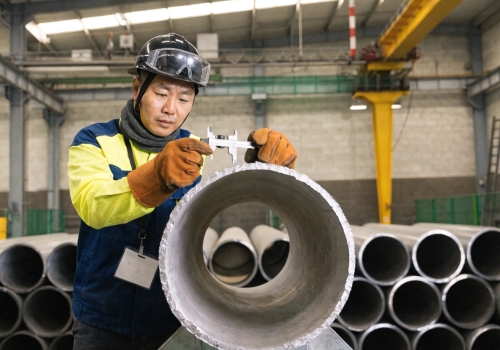
Unexpected dimensional variations can ruin your installation schedule and increase labor costs. Are you worried that rough surfaces or uneven wall thickness will affect your project quality? Hot rolling can result in wider dimensional tolerances and a rougher surface finish compared to cold drawing. However, for structural uses or large fluid transport, these cosmetic issues usually do not affect performance. We can also add machining to fix precise edges if you need it.
| Disadvantage | Why it Happens | Typical Solution |
|---|---|---|
| Rough Surface | Oxidation creates scale during cooling. | Sandblasting or Acid Pickling. |
| Size Variation | Metal shrinks as it cools down. | Machining edges or choosing Cold Drawn for precision parts. |
| Eccentricity | The piercing needle deviates slightly. | Strict quality control and ultrasonic testing. |
Where Can You Best Apply Hot Rolled Steel Pipes in Construction and Industry?
Choosing the wrong material leads to corrosion, leaks, and early replacement costs. Do you know exactly which industrial environments are best suited for hot rolled seamless pipes? Use hot rolled steel pipe for oil and gas transmission, chemical processing, and heavy machinery. It excels in high-temperature and high-pressure environments. If you need extreme precision, choose cold-drawn; for pure strength and volume, choose hot rolled.
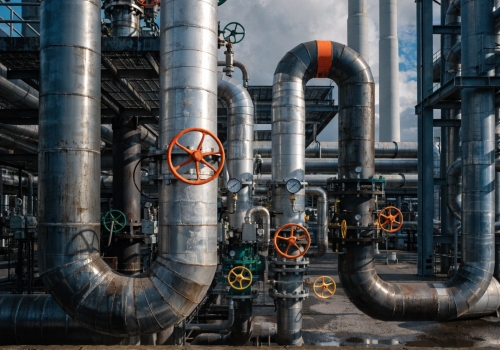
I have supplied pipes to over 100 countries. I see how different industries use our products. The most common use is in the energy sector. Oil and gas companies love these pipes. They use them for risers, oil casings, and transport lines. The pipe must handle massive internal pressure. It must also resist the harsh environment of an oil well. A welded pipe poses a risk here. A seamless hot rolled pipe is safe. The chemical industry is another big user. These factories have high temperatures and corrosive fluids. The dense structure of hot rolled steel resists these conditions well. I also supply many pipes for construction. Builders use them for structural support. They use them for piling at ports and bridges. The thick walls are perfect for holding up heavy loads. We also see these pipes in machinery. They become hydraulic cylinders or transmission shafts. Even though the surface starts rough, the material is strong. Manufacturers machine the outside to make it smooth, but they rely on the hot rolled core for strength. The process from round tube perforation to heating and rolling creates a versatile product. We can make diameters from 32mm up to over 1000mm. This range covers almost every need you might have.
| Industry | Specific Application | Why Hot Rolled? |
|---|---|---|
| Petroleum | Oil casings, Risers, Transport lines | Withstands high internal pressure and heat. |
| Chemical | Furnace tubes, High-pressure vessels | Resists corrosion and temperature spikes. |
| Construction | Piling, Structural columns, Bridges | High load-bearing capacity and low cost. |
| Machinery | Hydraulic pipes, Transmission shafts | Dense material structure for durability. |
Conclusion
I hope this helps you decide. Hot rolled seamless pipes offer great strength and value. They are perfect for tough jobs. Contact Finego Steel for your next order.
- No.101 Wanbo 1st Road, Nancun Town, Panyu District, Guangzhou, Guangdong, China
- 0086-020-84886013,84886093,84886091,84886012
- sales@finegosteel.com