
 Language
- No.101 Wanbo 1st Road, Nancun Town, Panyu District, Guangzhou, Guangdong, China
- 0086-020-84886013,84886093,84886091,84886012
- sales@finegosteel.com
- Complaints & Suggestions : suggest@finegosteel.com


Product News
Concentric vs Eccentric Reducer: Which Fitting Should You Choose?
Date:2026-10-20
Dealing with pipe flow problems? The wrong fitting causes severe pressure drops and system failures. We will help you choose the right reducer for your specific pipeline project. In the concentric vs eccentric reducer debate, concentric reducers connect pipes with matching centerlines for vertical runs. Eccentric reducers have mismatched centerlines, keeping one side flat to prevent trapped air in horizontal liquid lines. Your choice depends heavily on pipe orientation and flow state.
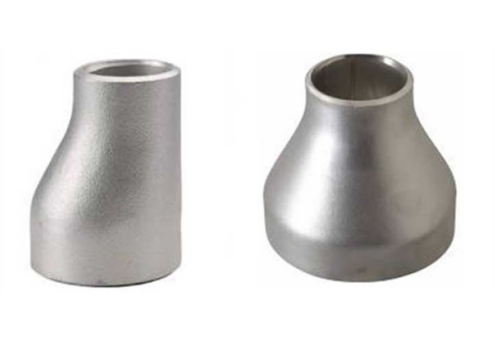
During my 18 years sourcing pipeline materials, I have seen many buyers struggle with this choice. Choosing between these two fittings might seem simple, but making a mistake here will cost your project time and money. Let us break down exactly what you need to know before you buy.
What is a pipe reducer and why do you need it?
Connecting different pipe sizes often causes weak joints. If you force a connection, leaks will happen. A proper reducer solves this by creating a smooth, secure transition. A pipe reducer is a fitting that connects a large pipe to a small pipe. It safely changes the pipe size within your system. You need it to adapt pipe sizes, control flow rates, or meet the specific pressure demands of your design.
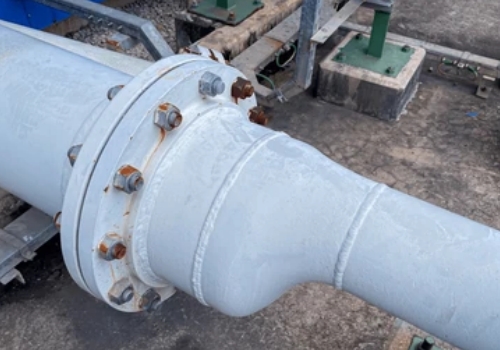
Let us look closer at why reducers matter for your system. When fluid moves from a large pipe to a small one, pressure naturally changes. If you do not manage this change, your pipes suffer from stress and wear.
Main uses of reducers
· Increasing fluid pressure in a specific section
· Saving physical space in tight installation areas You also need to consider the material. Most heavy industrial systems use steel reducers. At Finego Steel, we manufacture these fittings to handle extreme pressure. You can weld them directly to your steel pipes for a permanent seal.
Cost and risk factors
Using a cheap or incorrect reducer leads to cavitation (a process where fluid bubbles collapse and damage metal). Good reducers prevent this entirely. Below is a simple table showing typical material choices and their common applications.
| Material | Best Application | Connection Type |
|---|---|---|
| Carbon steel | High-pressure oil lines | Butt-welded |
| Stainless steel | Corrosive chemical flow | Welded or flanged |
| PVC | Low-pressure water lines | Glued |
By picking the correct material and type, you protect your system from long-term damage and expensive repairs.
What are the differences between a concentric vs eccentric reducer?
Confused about the physical differences? Picking the wrong shape traps deadly gas in your pipes. We will show you how to spot the difference instantly. The main difference between a concentric vs eccentric reducer is the centerline. Concentric reducers shrink uniformly like a cone, keeping the centerline straight. Eccentric reducers shrink toward one side, creating an offset centerline with one completely flat edge.
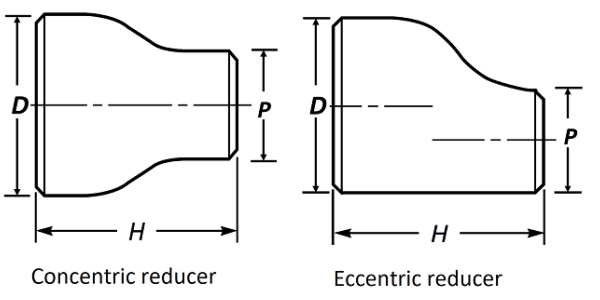
Understanding the exact physical and functional differences helps you avoid flow restrictions. As a buyer or designer, you must match the fitting shape to the fluid type and pipe orientation.
Concentric reducer features
· Look exactly like a symmetrical cone
· Keep the center line of both pipes perfectly matched
· Work best for vertical pipe installations
· Handle abrasive fluids well because flow remains centered
Eccentric reducer features
· Feature one flat side and one angled side
· Keep the top or bottom of the pipes level
· Work best for horizontal pipe installations
· Prevent air pockets or fluid pooling Let us look at a real-world risk. If you use a concentric reducer on a horizontal water pump suction line, air bubbles will gather at the top of the fitting. This trapped air causes the pump to fail. An eccentric reducer installed with the flat side facing up prevents this air trap completely.
| Feature | Concentric Reducer | Eccentric Reducer |
|---|---|---|
| Shape | Symmetrical cone | Asymmetrical cone |
| Centerline | Aligned | Offset |
| Best orientation | Vertical | Horizontal |
| Main purpose | General flow reduction | Preventing trapped gas |
How do you install them and what are the top FAQs?
Worried about installation errors or still have doubts? A poorly installed fitting causes immediate leaks. We provide the right steps and answers to secure your pipeline system. You install reducers by fitting them to the pipe ends and welding them solid. For concentric types, simply align the centers. For eccentric types in horizontal liquid lines, put the flat side up. For horizontal gas lines, put the flat side down. Installation methods change based on the material, but steel reducers almost always require butt-welding. This method gives you the strongest connection possible. As a buyer, you need to ensure your production team knows the standard procedures.
Basic installation steps
1. Clean the pipe ends and the reducer edges thoroughly
2. Align the reducer with the pipes using clamps
3. Tack weld the fitting to hold it in place
4. Complete the full weld around the entire joint
5. Inspect the weld for any pinholes or cracks The flat side placement of the eccentric reducer is critical. In liquid systems (like water or oil), you keep the flat side up. This stops air from getting trapped at the top of the pipe. In gas systems (like steam), you keep the flat side down. This stops water droplets from collecting at the bottom.
Frequently asked questions
Q: Can a reducer act as an expander?
A: Yes, absolutely. You use the exact same fitting. You just flow the liquid from the smaller end to the larger end.
Q: Do reducers cause pressure drops?
A: Yes, any change in pipe size causes a slight pressure drop. Concentric reducers create a smoother transition, which minimizes this drop.
Q: How do I measure a reducer for ordering?
A: You must specify the outside diameter (OD) of the large end, the OD of the small end, and the wall thickness.
Q: Why do pumps need eccentric reducers?
A: Pumps need them to prevent cavitation. Cavitation happens when trapped air enters the pump. The flat side prevents air pockets from forming.
Conclusion
Choosing the right concentric vs eccentric reducer dictates your system's success. Contact Finego Steel today to order high-quality pipeline reducers for your next project!
- Prev : What is the Best Method for Heat Exchanger Tube Inspection?
- Next : No matching information found
- No.101 Wanbo 1st Road, Nancun Town, Panyu District, Guangzhou, Guangdong, China
- 0086-020-84886013,84886093,84886091,84886012
- sales@finegosteel.com
We use cookies and other tracking technologies to improve your browsing experience on our website, to show you personalized content and targeted ads, to analyze our website traffic, and to understand where our visitors are coming from,This behavior is in compliance with the user consent policy.