
 Language
- No.101 Wanbo 1st Road, Nancun Town, Panyu District, Guangzhou, Guangdong, China
- 0086-020-84886013,84886093,84886091,84886012
- sales@finegosteel.com
- Complaints & Suggestions : suggest@finegosteel.com


Product News
How to Select Carbon Steel Pipes for High Pressure Service?
Date:2026-08-31
Pipe leaks cost money and ruin construction projects. You need reliable materials, but picking the right grade is hard. We show you exactly how to make the right choice today. You must match chemical composition to peak stress levels to select carbon steel pipes for high pressure service safely. You need to align operating pressure, temperature limits, and pipe schedules with specific material grades to prevent unexpected system failures.
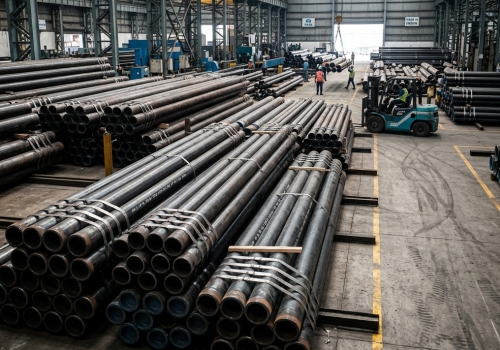
Making the wrong material choice leads to rapid system failure. Let us break down the exact steps to keep your pipelines safe and your costs low.
What Exactly Are Carbon Steel Pipes for High Pressure Service?
Weak pipes crack under high stress. You risk structural damage without strong materials. Carbon steel provides the strength you need to keep your construction systems running safely. Carbon steel pipes for high pressure service consist mainly of iron and carbon. This basic mix delivers high tensile strength and easy welding. They cost much less than alloy alternatives while handling massive pressure loads in large construction projects. I see buyers struggle with material costs every day. You want to save money, but you cannot compromise on safety. Carbon steel gives you the perfect balance of price and performance.
Core Benefits of Carbon Material
Here is why we use this material for high-stress jobs:
· Cost efficiency: It costs roughly 30% less than standard stainless steel (depending on market rates).
· Easy welding: Your workers do not need special procedures or expensive equipment to join these pipes.
· Durability: It resists physical impacts better than many complex alloys. We always test these pipes in our Finego Steel facilities. I check the mill test certificates myself. You must ensure the carbon content matches your exact pressure needs. If the carbon level is too low, the pipe will burst under peak loads. If it is too high, the pipe becomes too brittle to weld easily. Finding the middle ground keeps your construction project on track and under budget.
How Do Pressure Ratings Connect With Pipe Schedules?
Thin pipes burst under heavy loads. Guessing the thickness creates huge safety hazards. You must understand how schedules and pressure ratings work together to protect your site. Pressure ratings depend on pipe wall thickness, known as the pipe schedule, and the material tensile strength. A thicker wall increases the pressure capacity. You must verify both the schedule and the grade to guarantee safe high-pressure operations.
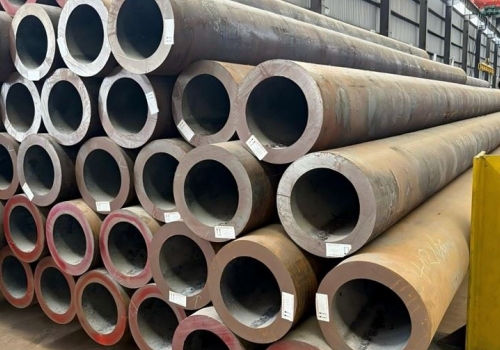
Many buyers look only at the grade and forget the schedule. This is a costly mistake. I always tell my clients to match the grade with the correct wall thickness. A strong grade with a thin wall will still fail.
Schedule and Thickness Basics
You must track these factors to prevent leaks:
· Outside diameter (OD): This stays constant for fitting compatibility.
· Wall thickness: This increases as the schedule number goes up.
· Internal flow area: This decreases when the wall gets thicker.
| Pipe Schedule | Wall Thickness Category | Best Use Case |
|---|---|---|
| Schedule 40 | Standard weight | Low to medium pressure lines |
| Schedule 80 | Extra heavy | High-pressure industrial systems |
| Schedule 160 | Double extra heavy | Extreme pressure and high-stress points |
Which Material Grades Should You Choose?
Using the wrong grade ruins your pipeline. Standard grades melt or crack in extreme conditions. You must pick the exact standard for your specific temperature and pressure limits. The most common grades for high-pressure use include ASTM A106 and API 5L. You must match the minimum tensile strength of these specific grades to your project requirements to ensure the pipeline handles the internal force without rupturing. I have seen construction projects halt because the wrong grade arrived on site. You need exact matches for your plans. The American Society for Testing and Materials (ASTM) and the American Petroleum Institute (API) define these standards clearly.
Common High-Pressure Grades
Here are the primary options you will encounter:
· ASTM A106 Grade B: This is the standard choice for high-temperature service. It has a minimum tensile strength of 415 MPa.
· ASTM A106 Grade C: This handles more demanding conditions. It offers a higher minimum tensile strength at 485 MPa.
· ASTM A333 Grade 6: We use this for low-temperature applications. It prevents the steel from turning brittle in freezing weather.
· API 5L X60: This grade supports heavy transport lines.
| Material Grade | Minimum Tensile Strength | Primary Application |
|---|---|---|
| A106 Gr. B | 415 MPa | Hot construction systems |
| A106 Gr. C | 485 MPa | High-pressure steam lines |
| A333 Gr. 6 | 415 MPa | Sub-zero temperature service |
| API 5L X60 | 520 MPa | Large diameter transport pipelines |
Always ask your supplier for the mill test certificates. At Finego Steel, we include full third-party inspection documents. You cannot verify the real pressure rating just by looking at the metal.
What Are the Hidden Risks in Grade Selection?
Ignoring operating environments causes fast pipe decay. Corrosion and heat shifts destroy standard steel rapidly. You need to identify environmental risks before you buy your materials. Selecting the right grade means balancing process demands with long-term reliability. You must consider operating pressure, temperature ranges, and corrosive fluids. Always ensure your technical choices meet local industry compliance rules to avoid legal fines and mechanical breakdowns.
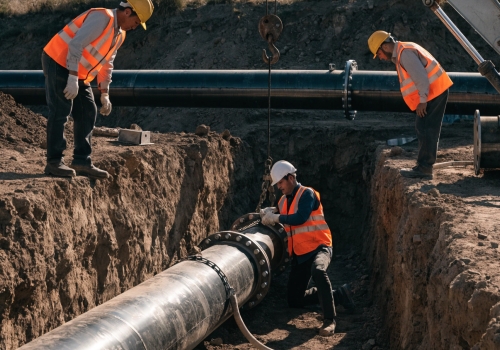
I constantly remind buyers that pressure is only one part of the puzzle. The fluid inside the pipe and the weather outside the pipe matter just as much. If you transport corrosive liquids, standard carbon steel will rust from the inside out.
Critical Selection Factors
You must check these details before ordering:
· Fluid type: Clean water needs different protection than harsh chemicals.
· Temperature swings: Rapid heating and cooling stress the metal joints.
· Physical location: Underground pipes face extra weight and constant moisture.
· Regulatory compliance: Your local codes dictate permissible material grades. For example, if you build a system in a freezing climate, you must specify low-temperature toughness. ASTM A333 prevents cold-weather cracking. If you ignore this, the pipe will shatter under high pressure. We always review your project details at Finego Steel. Our team helps you spot these hidden risks early. This check saves you from expensive repairs.
FAQ About High-Pressure Carbon Steel Pipes?
Unanswered questions lead to bad purchasing choices. Confusion slows down your project timeline. We answer the most common questions here so you can buy with total confidence. Many buyers ask about pipe lifespans, testing methods, and cost differences. Carbon steel pipes last decades if maintained properly. We test them using hydrostatic methods to guarantee safety. They remain the most cost-effective choice for construction pipelines. When I speak with construction managers, they often ask similar questions about reliability and sourcing. You need a one-stop supplier to save time. Here are the direct answers you need.
Frequently Asked Questions
Q: How long do carbon steel pipes for high pressure service last?
A: They typically last 20 to 50 years. This lifespan depends heavily on the internal fluid and external protection (like paint or special coatings).
Q: How do you verify the pipe can handle the pressure?
A: We perform hydrostatic testing. We fill the pipe with water and pressurize it above its normal rating to ensure it does not leak or deform.
Q: Are seamless pipes always better than welded pipes?
A: Yes, they are better for extreme pressure. Seamless pipes have no weld seams. A seam acts as a weak point under heavy stress.
Q: Why choose Finego Steel as a supplier?
A: We provide a complete one-stop sourcing experience. We deliver high-quality pipes and supply all testing documents to save you money and time.
Conclusion
Choosing the correct grade prevents dangerous system failures. Partner with a reliable supplier for guaranteed quality. Contact us today to order your durable carbon seamless steel pipe.
- No.101 Wanbo 1st Road, Nancun Town, Panyu District, Guangzhou, Guangdong, China
- 0086-020-84886013,84886093,84886091,84886012
- sales@finegosteel.com
We use cookies and other tracking technologies to improve your browsing experience on our website, to show you personalized content and targeted ads, to analyze our website traffic, and to understand where our visitors are coming from,This behavior is in compliance with the user consent policy.