
 Language
- No.101 Wanbo 1st Road, Nancun Town, Panyu District, Guangzhou, Guangdong, China
- 0086-020-84886013,84886093,84886091,84886012
- sales@finegosteel.com
- Complaints & Suggestions : suggest@finegosteel.com


Product News
What exactly is an astm a135 pipe and how does it compare to a53 and a795?
Date:2026-09-03
Are you struggling to choose the right steel pipe? Picking the wrong standard wastes time and money. We can help you understand the best options for your project. An astm a135 pipe is a standard specification for Electric-Resistance-Welded steel pipe. Manufacturers use it mostly for fire protection systems and light structural work. It offers a cost-effective alternative to seamless pipes while providing excellent flow characteristics and strong joints.
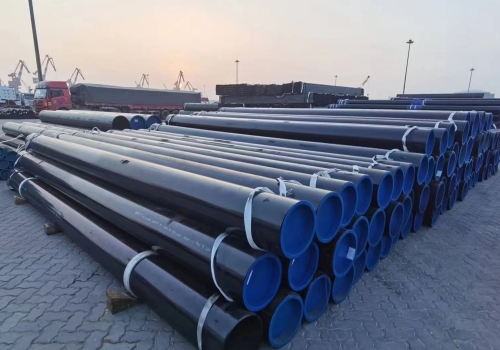
Let us look closer at these different steel pipe standards. You will find out exactly which pipe fits your project needs best and saves you the most money.
How does astm a135 pipe differ from a53 and a795 pipes?
Do you feel confused by all these ASTM standards? A wrong choice ruins your plumbing system. Let us break down the exact differences so you decide correctly. The main difference lies in the manufacturing process and intended use. ASTM A135 only uses electric resistance welding. Meanwhile, A53 and A795 allow both seamless and welded methods. A135 also permits non-destructive testing instead of traditional hydrostatic water testing.
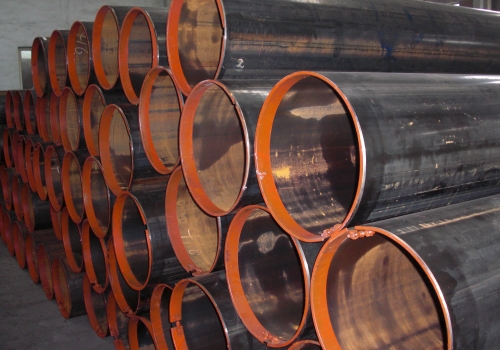
When I talk to buyers, they often mix up these three standards. You need to know the specific limits of each standard. We produce these pipes according to strict rules. The American Society for Testing and Materials sets these rules. The production methods create the biggest differences.
Production Methods
· ASTM A53 allows seamless, continuous butt welding, and electric resistance welding.
· ASTM A795 allows both seamless and welded methods. Electric resistance welding joins metal using heat. The machine applies pressure through electrodes. The current passes through the contact surface. The resistance heat melts the edges together. We do not use any filler metal during this process.
Testing Differences
You must test A53 pipes with water pressure. We call this hydrostatic testing. But the A135 and A795 standards give you other choices. You can use non-destructive testing instead. You can choose eddy current testing or ultrasonic testing. These modern methods save time on the production line and keep the pipes dry.
Standard Comparison
Here is a simple table to show the main differences:
| Feature | ASTM A795 | ASTM A53 | ASTM A135 |
|---|---|---|---|
| Application | Fire sprinkler systems | General pressure piping | Fire protection, light structural |
| Material | Black and galvanized steel | Steel (coated or uncoated) | Welded steel (usually not galvanized) |
| Process | Seamless and welded | Seamless and welded | Welded only |
| Cost | More expensive | Less expensive | Less expensive |
What are the key benefits of using astm a135 pipe in construction?
Do you want to save project costs without losing quality? High material prices kill your budget. This pipe standard gives you a smart and safe way out. Using this pipe gives you strict dimensional tolerance, smooth inner walls, and lower material costs. The welding process ensures strong joints. This makes it highly reliable for sprinkler systems where extremely high pressure is not the main daily concern.
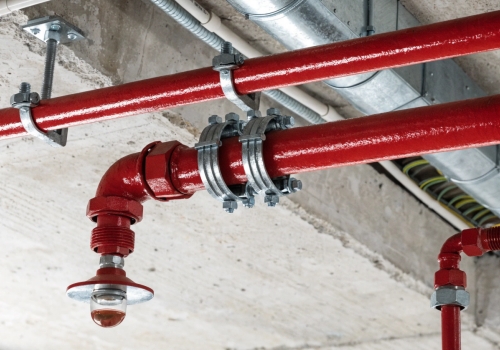
I have worked in the pipeline industry for 18 years. I always look for ways to cut costs for my engineering projects. Using astm a135 pipe is a great strategy. This pipe offers clear advantages for specific jobs. You do not always need an expensive seamless pipe for every fluid transport task.
Cost And Efficiency
· You save around 10 to 15 percent in material costs compared to seamless A53 pipes.
· You get a lighter pipe because of consistent wall thickness.
· You pay less for shipping because the total weight is lower.
· You finish installations faster because the pipe is easier for workers to handle.
Performance Parameters
This pipe comes in two specific grades. Grade A has a minimum tensile strength of 48,000 psi. Grade B has a minimum tensile strength of 60,000 psi. This strength easily handles standard fire protection water pressure. The standard also defines strict limits for outside diameter and wall thickness.
Surface Quality
The electric resistance welding process creates a very smooth inner wall. A smooth wall reduces water friction. Water flows faster through the pipe. This fast flow is very important for fire sprinkler systems during an emergency. You also get exact wall thickness. Seamless pipes often have uneven walls. Welded pipes start from flat steel sheets. This guarantees uniform thickness across the entire pipe length.
What are common questions about these steel pipes?
Do you still have doubts about pipe specifications? Unanswered questions lead to bad purchasing mistakes. We answer the most common questions below to guide your choice. Buyers often ask about testing methods, material coatings, and pressure ratings. We provide clear answers to help you understand welding types, galvanizing options, and specific limits for these steel pipes. You need this knowledge before you place an order.
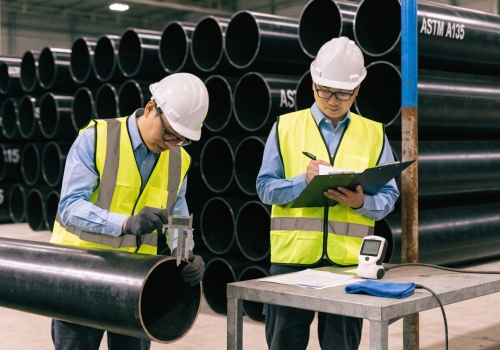
You need clear facts to make good buying choices. I gather the most frequent questions from my clients. I answer them directly below so you can plan your next project without any confusion.
Frequent Questions And Answers
Q1: Can I use A135 pipe for high-pressure steam lines?
A1: No. You should not use this pipe for high-pressure steam. It is best for conveying gas, vapor, water, or other liquids under moderate pressure. You should use A53 seamless pipes for higher pressure needs.
Q2: Does this pipe come with a galvanized coating?
A2: Usually, we supply it as black steel. We often coat it with a zinc-rich primer for fire systems. But you can request a hot-dipped galvanized coating if your project needs extra rust protection.
Q3: Why do manufacturers prefer non-destructive testing over hydrostatic testing?
A3: Non-destructive testing is much faster. Eddy current testing spots hidden cracks instantly. It does not leave the inside of the pipe wet. Wet pipes can rust easily if you do not dry them well. This method speeds up our production line.
Q4: What does ERW stand for in pipe manufacturing?
A4: ERW stands for Electric-Resistance-Welded. We heat the steel edges and press them together mechanically. We do not use any extra welding metal. This makes a very clean, flat, and strong joint.
Q5: Can I thread the ends of this pipe?
A5: Yes. You can easily thread, groove, or bevel the ends. Most fire protection systems use grooved ends for fast coupling. The uniform wall thickness makes threading very accurate.
Conclusion
Choosing the right pipe saves you money and time. We at Finego Steel supply top-quality astm a135 pipe for all your needs. Contact us today to place your order.
- No.101 Wanbo 1st Road, Nancun Town, Panyu District, Guangzhou, Guangdong, China
- 0086-020-84886013,84886093,84886091,84886012
- sales@finegosteel.com
We use cookies and other tracking technologies to improve your browsing experience on our website, to show you personalized content and targeted ads, to analyze our website traffic, and to understand where our visitors are coming from,This behavior is in compliance with the user consent policy.