
 Language
- No.101 Wanbo 1st Road, Nancun Town, Panyu District, Guangzhou, Guangdong, China
- 0086-020-84886013,84886093,84886091,84886012
- sales@finegosteel.com
- Complaints & Suggestions : suggest@finegosteel.com


Product News
What Is ASTM A53 Welded Steel Pipe and How Does It Benefit Your Project?
Finding the correct piping standards for large construction projects can feel overwhelming. If you choose the wrong grade or type, you risk safety failures and waste your project budget. I am here to explain the ASTM A53 standard simply and help you make the right choice. ASTM A53 welded steel pipe is a standard specification for carbon steel pipes used in structural steel, plumbing, and low-pressure fluid conveyance. It covers seamless and welded black and hot-dipped galvanized steel pipes in NPS 1/8 to NPS 26. It is ideal for steam, water, gas, and air lines.
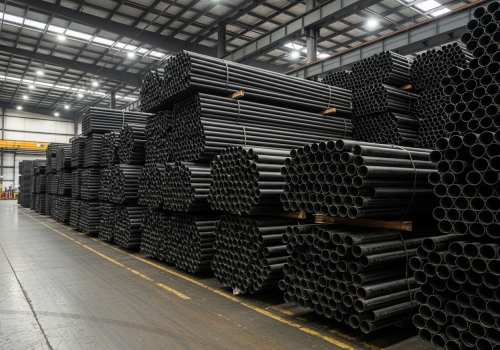
Many engineers and purchasing managers find the specific grades and manufacturing types within the A53 standard confusing. A lack of clarity here can lead to ordering materials that do not fit your specific engineering requirements. Let’s break down the differences so you can buy the right material with confidence.
What Are the Different Types and Grades of A53 Welded Steel Pipe?
You might see terms like "Type E" or "Grade B" on quote sheets and feel unsure about which one to pick. Ignoring these small letters can cause big technical issues later during installation or operation. Type F is furnace-butt welded, while Type E is electric-resistance welded (ERW). Grade A offers higher ductility for bending, whereas Grade B offers higher tensile strength for pressure. Most a53 welded steel pipe orders for construction projects today prefer Type E Grade B for its reliability.
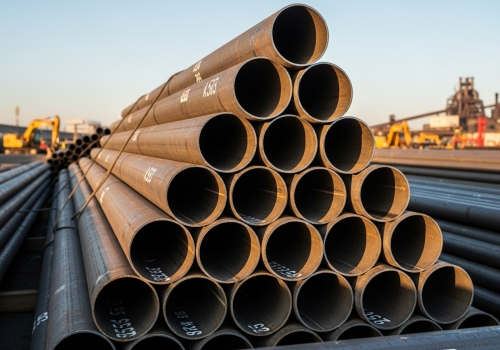
When we talk about A53 pipe, we are usually discussing three types, but for welded applications, only two matter most to you. First, there is Type F. This is furnace-butt welded. It is an older method and is generally only available in Grade A. It is not common in modern high-spec projects. Then, there is Type E, which stands for Electric-Resistance Welded (ERW). At Finego Steel, this is what we produce most often for our global clients. Type E pipes are stronger and have a better surface finish. Within Type E, you have two grades: Grade A and Grade B. Grade A is softer. If your project involves bending the pipe for coils or special shapes, Grade A is the right choice because it has higher ductility. However, Grade B is the industry standard for most structural and fluid applications. It has higher tensile strength and yield strength. Here is a simple breakdown of the mechanical properties to help you compare:
| Property | Grade A | Grade B |
|---|---|---|
| Tensile Strength, min | 48,000 psi (330 MPa) | 60,000 psi (415 MPa) |
| Yield Strength, min | 30,000 psi (205 MPa) | 35,000 psi (240 MPa) |
| Primary Use | Bending, Coiling | Structural support, Pressure |
| Carbon Content (max) | 0.25% | 0.30% |
In my experience serving EPC companies, 90% of the requests we receive are for Type E, Grade B. It acts as a great "middle ground" material. It is strong enough for structural loads but cheaper than seamless pipe. Understanding this difference ensures you do not pay extra for seamless pipe when a53 welded steel pipe Type E will do the job perfectly.
How Do We Ensure the Quality of A53 Welded Steel Pipe?
A pipe might look good on the outside with a nice coat of paint, but it could fail under pressure if the weld is weak. You cannot afford leaks or structural failures in your large-scale construction projects. Quality assurance for a53 welded steel pipe involves rigorous testing. This includes hydrostatic testing to check for leaks and non-destructive electric testing to ensure the weld seam is solid. The manufacturing process must include heat treatment to stress-relieve the weld zone and prevent cracking.
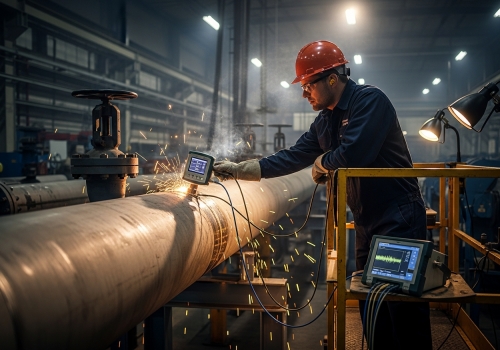
The manufacturing process for ASTM A53 is strict. To make Type E pipe, we feed a strip of steel into a series of rollers. These rollers curve the steel until it forms a tube. Then, an electric current passes through the edges, heating them up so they fuse together. This creates the weld seam. However, the process does not stop there. The heat from welding creates stress in the metal. If we leave it alone, the pipe could crack right next to the weld. That is why we perform heat treatment. We heat the weld seam to a specific temperature (usually above 540°C) to relax the steel. This makes the weld as strong as the rest of the pipe. At Finego Steel, we treat quality seriously because we know your reputation is on the line. Every length of a53 welded steel pipe undergoes specific tests before it leaves our factory. The most important test is the Hydrostatic Test. We fill the pipe with water and pressurize it. If there is even a tiny pinhole leak, we reject it. We also do a Flattening Test. We take a ring of pipe and squash it flat. If the weld breaks, the batch fails. Here is what a standard inspection plan looks like for these pipes:
| Test Type | Purpose | Frequency |
|---|---|---|
| Chemical Analysis | Ensures Carbon, Manganese, Phosphorus, and Sulfur levels are correct. | Per heat/lot |
| Tensile Test | Verifies the steel is strong enough. | Per lot |
| Hydrostatic Test | Checks for leaks under pressure. | Every pipe length |
| Flattening Test | Checks the strength of the weld seam. | Per lot |
| Visual Inspection | Checks for straightness and surface defects. | Every pipe length |
By following these steps, we ensure that the product arriving at your job site in Germany or anywhere else is ready for immediate installation.
Where Is the Best Place to Use A53 Welded Steel Pipe?
Using high-grade seamless pipe for simple low-pressure lines wastes your company's money and reduces your profit margin. You need to know exactly where welded pipe fits best to optimize your procurement costs. You should use this pipe for low-pressure systems like water, gas, and steam, and for structural applications like piling and scaffolding. It is not suitable for high-pressure or high-temperature services, but it is the most cost-effective choice for general construction needs.
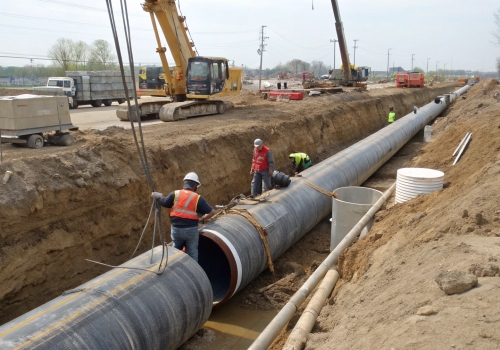
Critical thinking is key here. As a Purchasing Manager, you balance cost and performance. ASTM A53 is designed for "non-critical" applications. This does not mean it is bad quality; it means it is not designed for extreme environments like nuclear plants or high-pressure oil refineries (for those, you would use ASTM A106). I see many designers over-specifying materials. They ask for seamless pipe when welded A53 would work fine. The price difference can be huge. Welded pipe is faster to produce and costs less. Here are the main areas where we supply a53 welded steel pipe:
1. Mechanical and Pressure Systems: It is perfect for transporting water, compressed air, and steam in HVAC systems. If the pressure is low to medium, A53 Type E is the standard.
2. Structural Applications: Because Grade B has good strength, it is used for columns, posts, fence piling, and scaffolding. It supports weight very well.
3. Generator Plants and Refineries: It is used for utility lines—the pipes that carry water or air around the plant, not the main high-pressure oil lines. We at Finego Steel have provided these pipes to projects in over 100 countries. Whether it is for urban pipeline networks or port construction, this material is the workhorse of the industry.
| Application | Recommended Type | Why? |
|---|---|---|
| Water Transport | Galvanized Type E | Zinc coating prevents rust; ERW is cost-effective. |
| Structural Column | Black Type E, Grade B | High strength supports heavy loads. |
| Steam Line | Black Type E | Handles heat well (within limits) and pressure. |
By switching to A53 welded pipe for these specific areas, you can save significant budget without sacrificing safety.
Conclusion
ASTM A53 welded steel pipe is a versatile, cost-effective solution for low-pressure fluid transport and structural support. By choosing the right type and grade, specifically Type E Grade B, and sourcing from a reliable partner like Finego Steel, you ensure project safety and budget efficiency.
- No.101 Wanbo 1st Road, Nancun Town, Panyu District, Guangzhou, Guangdong, China
- 0086-020-84886013,84886093,84886091,84886012
- sales@finegosteel.com