
 Language
- No.101 Wanbo 1st Road, Nancun Town, Panyu District, Guangzhou, Guangdong, China
- 0086-020-84886013,84886093,84886091,84886012
- sales@finegosteel.com
- Complaints & Suggestions : suggest@finegosteel.com


Product News
What are seamless steel tubes, and why do they matter for your projects?
Pipe failures cause huge delays and cost money. Weak joints can ruin your whole pipeline system. I will show you how seamless pipes solve this big problem perfectly. What are seamless steel tubes? They are solid steel pipes made without any welding seams. A solid steel block is pierced to create a hollow tube. This single-piece structure offers superior strength, handles high pressure, and prevents leaks in critical pipelines.
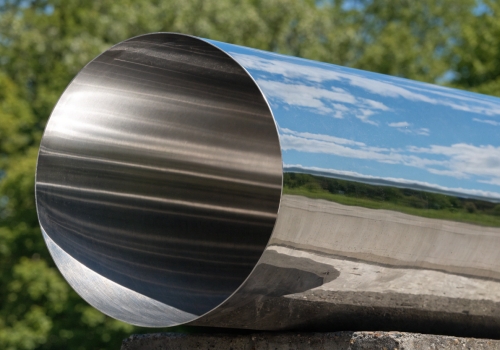
Are you tired of dealing with pipe leaks in your construction projects? I know the pain of replacing bad pipes on a tight schedule. Let us look deeper into these amazing tubes, and you will never want to use cheap alternatives again.
How exactly are seamless steel tubes made?
You might worry about weak spots in your pipes. A bad manufacturing process leaves hidden flaws. Knowing how they are made gives you total peace of mind. Workers heat a solid steel block called a billet. They use a piercing mill to push a hole through the hot steel center. Then, rollers stretch and shape the hot metal into a long tube. Finally, they cool and finish the pipe to exact sizes.
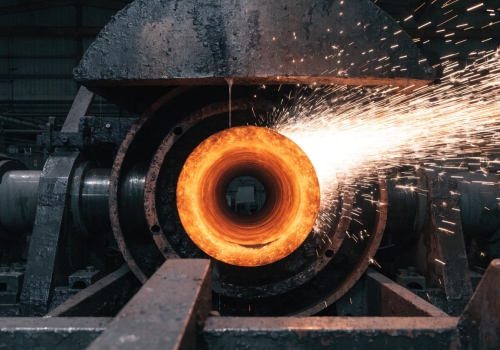
The Heating and Piercing Stage
The process starts with extreme heat. We take a solid steel cylinder. We heat it until it is red hot and soft. Then, a strong tool pushes right through the middle. This creates a rough, thick-walled hollow shell. I remember visiting the factory floor at Finego Steel early in my career. The heat from the piercing mill was amazing. We always monitor this heat very carefully. It makes the steel easy to shape.
Hot Rolling vs Cold Drawing
After piercing, the rough tube needs sizing. We use two main methods here. We can use hot rolling or cold drawing.
| Process Type | Process Temperature | Finish Quality | Cost Level |
|---|---|---|---|
| Hot Finished (HFS) | Very high | Rough and scaled | Lower |
| Cold Drawn (CDS) | Room temperature | Smooth and exact | Higher |
What is the difference between seamless and welded tubes?
Choosing the wrong pipe can ruin your system pressure. Welded seams often crack under heavy loads. I will help you choose the right pipe to avoid costly accidents. Seamless tubes have no joints at all. Welded tubes are made by rolling flat steel sheets and welding the edges together. Seamless pipes offer higher pressure ratings and better strength. Welded pipes cost less but have a weak seam running down their length.
Understanding the Weak Points
A welded pipe has a long seam. This seam is a structural weak point. Heat from the welding process changes the metal. It creates a heat-affected zone. This zone is prone to rust and stress cracks. What are seamless steel tubes really good for? They have no seam at all. They are one solid piece of metal. This makes their strength uniform across the whole pipe. Pressure hits the pipe walls evenly. The pipe does not split open.
Comparing the Two Types
Let us look at a simple comparison. I use this guide when I buy materials for big EPC projects.
| Feature | Seamless Steel Tube | Welded Steel Tube |
|---|---|---|
| Structural Integrity | One solid piece, no weak points | Has a weld seam, potential weak point |
| Pressure Rating | Very high, safe for critical jobs | Moderate, not for extreme high pressure |
| Size Accuracy | Very exact, especially cold drawn | Less exact near the weld seam |
| Production Cost | Higher due to complex process | Lower due to simple sheet rolling |
When I source pipes for Finego Steel, I always check the project needs. I never use welded pipes for extreme high-pressure lines. The risk is just too big. Seamless pipes cost more up front. But they save you money on repairs and replacements later. You sleep better at night when you use seamless pipes for tough jobs.
Where are seamless steel tubes used in industry?
Using weak materials in harsh places causes sudden failures. Broken lines stop production and cost thousands. You must use the strongest materials for the toughest jobs. Industries use seamless steel pipes for heavy-duty applications. You will find them in oil and gas pipelines, chemical processing plants, and power generation stations. They are also widely used in construction for strong roof trusses and heavy machinery parts.
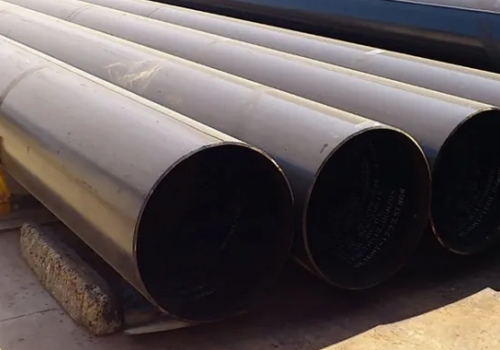
Oil, Gas and Energy Sectors
The energy sector demands extreme safety. Oil and gas pipelines face huge internal pressure. They also face harsh weather outside. Seamless pipes handle both perfectly. I have supplied miles of piping to offshore oil rigs. We only trust seamless pipes for these sites. A single leak on an oil rig is a total disaster. The solid walls keep the dangerous fluids locked inside safely.
Construction and Heavy Engineering
Construction projects also rely on these strong pipes. Look at big stadiums or modern airports. The roof trusses use heavy structural steel pipes.
| Industry | Common Use Case | Why Seamless is Chosen |
|---|---|---|
| Oil & Gas | High-pressure fluid transport | Handles extreme pressure safely |
| Construction | Structural tension bars, roof trusses | High uniform strength |
| Automotive | Car safety systems, drive shafts | Exact sizes and reliability |
| Food & Drink | Processing lines | Smooth, hygienic internal surface |
At Finego Steel, we see many orders for food factories. They need stainless seamless pipes. The smooth inside wall stops food from getting stuck. It stops bacteria from growing. Welded pipes have tiny bumps inside the seam. Those bumps hide dirt. Seamless pipes keep everything clean and safe. They really are the backbone of modern industry. You see them everywhere once you start looking.
What metals are available for seamless tubes?
Using the wrong metal makes pipes rust quickly. Replacing rusted pipes destroys your project budget. Picking the right metal grade keeps your system running for decades. You can get seamless tubes in many metals. Mild steel is common for construction work. Stainless steel is used for clean and anti-rust needs. You can also find them in alloy steel for high heat, and aluminum for lightweight structural jobs.
The Power of Mild and Carbon Steel
Most standard industrial pipes use carbon steel. It is very strong and easy to work with. Mild steel gives you great value for structural jobs. When I plan purchases for EPC companies, carbon steel is always on my list. It handles basic pressure and structural weight very well. It is the best choice for everyday building tasks.
Stainless Steel and Special Alloys
Sometimes carbon steel is not enough. Corrosive environments will eat carbon steel quickly.
| Metal Type | Key Benefit | Typical Environment |
|---|---|---|
| Carbon Steel | High strength, cost-effective | Standard structural, normal indoor |
| Stainless Steel | Will not rust, easy to clean | Food factories, chemical plants |
| Alloy Steel | Handles extreme heat | Power plants, hot oil lines |
| Aluminum | Very light, easy to extrude | Aerospace, custom architecture |
I once worked on a chemical plant project. We had to use high-grade stainless seamless pipes. The chemicals were too harsh for standard metal. Stainless steel costs more, but it lasts forever in bad conditions. Finego Steel stocks all these different metals. We know that every project needs a specific metal type. We always match the metal to the exact working conditions. You save money when you pick the correct metal the very first time.
Conclusion
Seamless steel pipes provide unmatched strength and safety for your toughest projects. They eliminate weak weld seams completely. Trust Finego Steel to supply top-quality pipes for your pipeline systems.
- No.101 Wanbo 1st Road, Nancun Town, Panyu District, Guangzhou, Guangdong, China
- 0086-020-84886013,84886093,84886091,84886012
- sales@finegosteel.com