
 Language
- No.101 Wanbo 1st Road, Nancun Town, Panyu District, Guangzhou, Guangdong, China
- 0086-020-84886013,84886093,84886091,84886012
- sales@finegosteel.com
- Complaints & Suggestions : suggest@finegosteel.com


Product News
What Are Threaded Pipe Flanges and How Do They Work?
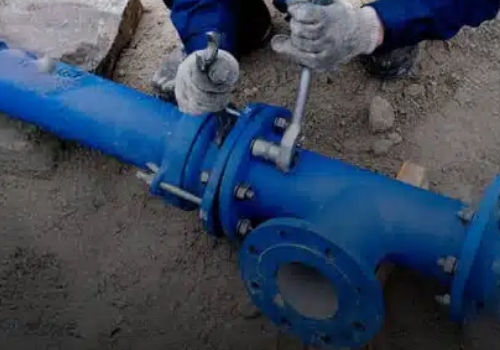
You need to connect pipes but cannot weld. Welding causes delays. Welding brings safety risks. Threaded pipe flanges solve this problem. They offer a strong connection. Threaded pipe flanges are mechanical connectors with inside threads. They screw onto pipes with matching outside threads. This design creates a pressure-tight joint without sparks. They work best for dangerous areas. They fit small pipes very well.
A wrong choice causes bad leaks. Bad leaks ruin your whole project. You must learn the rules below. These rules help you protect your pipe system.
How Do Threaded Pipe Flanges Stop Water Leaks?
A leaking pipe joint ruins your work. Fluid leaks cause down time. Leaks create big hazards. Good thread pastes stop these costly leaks. A threaded pipe flange seals water in two steps. The angled threads wedge together with a thread paste. This stops fluid. Bolts pull the flange against a second flange. The bolts squeeze a gasket between them. This creates the main seal.
The Power Of NPT Threads
The National Pipe Taper thread creates a strong lock. We call it NPT for short. You turn the flange on the pipe. The angled shape tightens the parts together. I often remind buyers about one rule. Threads alone cannot stop all leaks. You must use a good thread paste. You can also use a special tape. The paste fills tiny gaps. These gaps hide between the metal threads. The paste blocks the fluid.
Gasket And Bolt Choices
The bolted joint acts as the heart of the seal. The bolts do not hold the fluid. They pull the flanges together. They squeeze the gasket. You must pick the right gasket for your fluid. You must match the heat level.
| Gasket Type | Face Type | Best Use | Heat Limit |
|---|---|---|---|
| Spiral-Wound | Raised Face | High pressure systems | Up to 1500°F |
| Flat Ring Metal | Raised Face | High heat lines | Very high |
| PTFE Sheet | Flat Face | Mild chemical lines | Up to 500°F |
| Rubber Ring | Flat Face | Utility water lines | Up to 250°F |
What Are The Danger Limits Of Threaded Pipe Flanges?
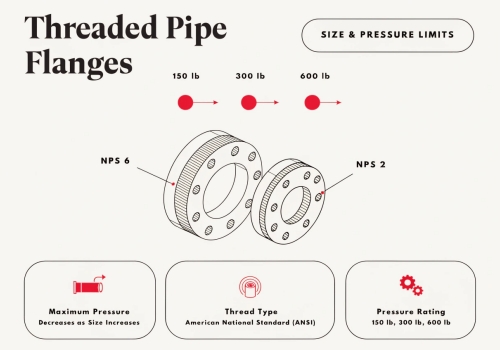
Broken flanges cause massive project delays. Wrong flanges crack under high stress. You must know the limits of your parts. This knowledge keeps your piping safe. Threaded pipe flanges work best in small sizes. They fit low pressure systems. They are dangerous for systems with high shaking. They fail during extreme heat changes. High stress loosens the threads. This stress causes very dangerous leaks.
Heat And Pressure Rules
Pressure and heat work together. They test your flange every day. The heat goes up in the pipe. The metal gets weaker. The flange holds less pressure. The ASME B16.5 rulebook tells us the safe limits. It shows the safe pressure for different heats. You must follow this rulebook. It keeps your plant safe from blasts.
Pipe Size And Work Rules
You should use these flanges for small pipes. Pipes under 4 inches work best. Large threads are hard to turn. They are hard to seal by hand. I tell clients to look at the work site first. You must check for shaking.
| Work Area | Danger Level | Problem | What To Do |
|---|---|---|---|
| Quiet flow line | Low Danger | No problem | Use threaded flange |
| Shaking pump pipe | High Danger | Threads come loose | Use weld flange |
| Fast heat changes | High Danger | Metal breaks the seal | Weld the joint |
| Toxic gas line | Very High | Gas leaks hurt people | Never use threads |
Last year, a large company in the Americas called us. They asked for big 8-inch threaded pipe flanges. They wanted them for a shaking gas line. I told them no. We supplied socket-weld flanges instead. We at Finego Steel do not just sell parts. We use our 28 years of work to keep you safe. We want your project to succeed without bad accidents.
Why Choose Threaded Pipe Flanges Over Slip-On Flanges?
Choosing flange types feels confusing. A wrong choice wastes your money. A wrong choice wastes your time. Comparing methods helps you buy the exact part. Threaded pipe flanges screw on without welding. They are fast to install. Slip-on flanges slide over the pipe. They need two welds. Slip-on flanges handle shaking better. They take more time to install. They require special welding skills.
The Welding Difference
The biggest difference is the welding part. You can install a threaded flange with simple hand tools. You clean the pipe first. You add the thread paste. You screw it on tight. This works perfect for places with strict fire rules. Some places ban hot work. Some places ban sparks. Slip-on flanges need a trained welder. The welder makes one weld inside the flange. The welder makes one weld outside the flange. This takes much more time. This costs much more money.
Strength And Money Choices
Slip-on flanges cost less money to buy. They cost more money to put on the pipe. They stay very strong against shaking. They stay strong against bending.
| Feature | Threaded Flange | Slip-On Flange |
|---|---|---|
| Welding Needed | No welding | Needs two welds |
| Install Speed | Very fast | Very slow |
| Best Pipe Size | Under 4 inches | Good for all sizes |
| Shake Check | Very poor | Very good |
We help buyers balance these hard choices. A customer built a large water network in Southeast Asia. They needed to connect pipes in a small room. Welding was too dangerous there. We at Finego Steel sent them high-quality threaded pipe flanges. They finished the job two weeks early. The right flange saves your money. The right flange stops headaches on the busy job site.
Conclusion
Threaded pipe flanges offer a fast way to connect pipes. Finego Steel gives you safe parts. We help you build strong global projects.
- No.101 Wanbo 1st Road, Nancun Town, Panyu District, Guangzhou, Guangdong, China
- 0086-020-84886013,84886093,84886091,84886012
- sales@finegosteel.com