
 Language
- No.101 Wanbo 1st Road, Nancun Town, Panyu District, Guangzhou, Guangdong, China
- 0086-020-84886013,84886093,84886091,84886012
- sales@finegosteel.com
- Complaints & Suggestions : suggest@finegosteel.com


Product News
What exactly is a schedule 80 galvanized pipe?
Date:2026-09-09
High-pressure projects demand strong materials. Weak pipes fail, causing costly leaks. We provide a schedule 80 galvanized pipe to solve your extreme pressure and corrosion problems. A schedule 80 galvanized pipe is a heavy-wall carbon steel tube coated with liquid zinc. It features thicker steel walls than standard pipes. This extra thickness handles extreme fluid pressure safely. The hot zinc layer stops rust, making it perfect for harsh industrial and outdoor environments.
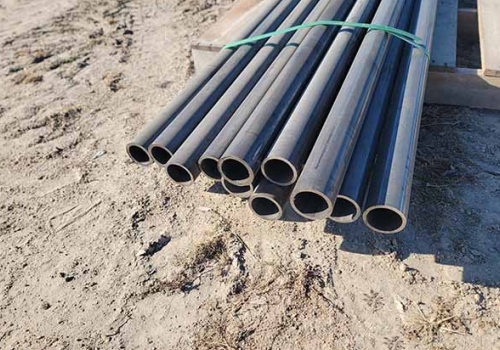
Stop losing money on failed pipe systems. We break down the exact specifications below so you can choose the best steel for your next build.
How does this pipe compare to a standard schedule 40 pipe?
Choosing the wrong wall thickness risks a pipe burst. You waste money on replacements. We compare these standards so you buy the exact strength you need. A schedule 80 pipe has a thicker wall and smaller inside diameter than a schedule 40 pipe. Both share the exact same outside diameter. This extra thickness lets the heavier pipe handle much higher pressure and physical stress in demanding projects.
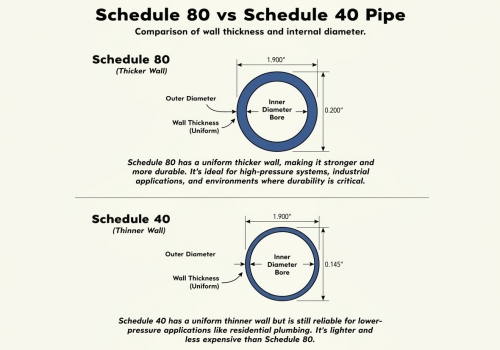
To make smart purchasing decisions, you must look closely at the physical numbers. The word "schedule" refers directly to the pipe wall thickness. The outside diameter stays constant across different schedules for a given pipe size. Therefore, a schedule 80 pipe simply adds more steel to the inside. This extra steel costs more upfront. However, it prevents catastrophic failures in high-stress zones.
Wall thickness matters
When you compare a 2-inch pipe, you see a massive difference in strength.
| Nominal Pipe Size | Outside Diameter | Schedule 40 Wall | Schedule 80 Wall |
|---|---|---|---|
| 1 inch | 1.315 inches | 0.133 inches | 0.179 inches |
| 2 inch | 2.375 inches | 0.154 inches | 0.218 inches |
| 4 inch | 4.500 inches | 0.237 inches | 0.337 inches |
Cost versus benefit
· Installation weight: Your crew needs heavier equipment to lift and install these thick pipes safely.
· Long-term savings: You save money over time. The thicker pipe resists internal wear and external impacts far better than lighter alternatives.
What steps make our manufacturing process reliable?
Poor coating causes early rust. Your entire system degrades fast. We follow strict galvanizing steps to guarantee a bond that lasts for decades. We create these pipes by forming high-strength carbon steel, cleaning it with acid, and dipping it into liquid zinc. This chemical reaction bonds the zinc to the steel. The process creates a tough, rust-proof shield for your pipeline. Manufacturing a heavy-wall pipe requires precise control at every stage. We cannot just paint zinc onto the steel. We must fuse the zinc chemically to the metal core. This chemical process ensures the protective layer stays intact during transport and installation.
The hot-dip method
1. Forming: We start with premium carbon steel. We roll and weld it, or we extrude it seamlessly for the highest pressure ratings.
2. Cleaning: We drop the raw steel pipe into an acid bath. This step strips away rust, oil, and mill scale. Clean steel is mandatory for the zinc to stick properly.
3. Dipping: We submerge the clean pipe into a vat of liquid zinc. We heat this vat to roughly 840 degrees Fahrenheit (*about 450 degrees Celsius*). The zinc reacts quickly with the iron in the steel.
4. Cooling: We pull the pipe out and cool it in a water tank. This locks the durable silver-gray finish in place.
Quality checks
After cooling, our team inspects every single pipe. We measure the zinc thickness with digital gauges. We also check the inside of the pipe. A smooth inner coating prevents clogs when you pump fluids through your system.
Where should you install this heavy-duty pipeline?
Standard pipes crack under heavy loads. Fluid leaks ruin job sites. You must specify thick-walled pipes for industrial spots that demand extreme durability. You should use a schedule 80 galvanized pipe for high-pressure water systems, chemical transport, and structural supports. Its rust resistance and thick steel make it the top choice for outdoor industrial networks.
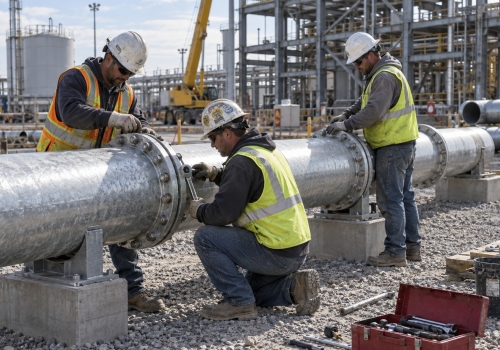
I always tell project managers to match the pipe to the environment. You do not need a thick pipe for a basic indoor water line. However, when you move outdoors or pump harsh chemicals, you must use a strong pipe.
Industrial fluid transport
· Wastewater treatment: Underground pipes face constant moisture and soil acidity. The hot-dip galvanizing adds decades to the life of the pipe.
Construction and structural support
· Scaffolding: The heavy steel resists bending when large machinery bumps into it on a job site.
· Marine applications: Near the ocean, salt spray destroys bare metal in weeks. The zinc barrier protects the core steel from fast corrosion.
Temperature limits
You must keep the operating temperature below 140 degrees Fahrenheit (*about 60 degrees Celsius*). If the fluid gets hotter than this limit, the zinc layer starts to degrade and peel. For high-heat projects, we always recommend bare carbon steel instead of galvanized material.
What are the standard sizes and pressure limits?
Guessing pipe specs causes system failures. You risk worker safety. We supply exact pressure charts so you design your network with total confidence. These thick pipes come in sizes from 1/8 inch to 16 inches. They safely hold pressures ranging from 280 psi to 690 psi at room temperature. Smaller diameter pipes always hold more pressure than larger ones. When you design a pipeline, pressure ratings dictate your material choices. A schedule 80 pipe handles a significantly higher maximum working pressure than a standard pipe. You must remember that as the pipe diameter increases, the maximum safe pressure drops.
Pressure rating chart
Here is a quick look at what these pipes can handle safely at normal room temperature.
| Pipe Size Range | Maximum Safe Pressure |
|---|---|
| 1/8 inch to 1 inch | 690 psi |
| 1 1/4 inch to 2 inch | 630 psi |
| 2 1/2 inch to 3 inch | 550 psi |
| 3 1/2 inch to 4 inch | 510 psi |
| 5 inch to 6 inch | 490 psi |
| 8 inch to 10 inch | 420 psi |
| 12 inch to 14 inch | 360 psi |
| 16 inch | 280 psi |
Sourcing advice
I recommend buying standard pipe lengths of 21 feet (*about 6.4 meters*). This exact size fits neatly into shipping containers and standard trucks. This packing efficiency lowers your freight costs significantly. When you calculate your total required length using your CAD tools, you should factor in a 5% waste margin. Your team needs this extra material for cutting and threading on the job site.
What are the most frequently asked questions about this pipe?
Unanswered questions stall purchasing orders. You lose valuable build time. We answer your pressing questions right here so you can move forward quickly. Buyers frequently ask about lifespan, welding safety, and water system use. This pipe lasts over 50 years outdoors. It requires special air ventilation for safe welding. We recommend keeping it strictly for industrial fluids. Over my years supplying construction materials, I hear the exact same questions from purchasing managers. We want to clear up these common confusions today. Clear answers help you know exactly how to handle the product once it arrives on your site.
Common questions and answers
Q: How long does the zinc coating actually last?
A: In rural outdoor environments, the zinc layer easily lasts 50 years. In coastal or heavy industrial zones, you should expect a lifespan of 20 to 25 years before the core steel begins to rust.
Q: Can my team weld this pipe on the job site?
A: Yes, you can weld it. However, welding burns off the zinc coating at the joint. This burning process releases toxic zinc fumes. Your welders must wear proper respirators and work in well-ventilated spaces. After welding, you must paint the bare joint with a zinc-rich primer.
Q: Is it safe for drinking water networks?
A: We do not recommend galvanized pipes for modern drinking water systems. Over decades, the inside layer can trap minerals. Use modern plastics or copper for drinking water, and keep galvanized steel for industrial fluids.
Conclusion
A schedule 80 galvanized pipe gives your heavy-duty projects the exact strength and rust resistance they need. Contact Finego Steel today to order high-quality pipes and save project costs.
- Prev : What is a straight seam welded steel pipe?
- Next : No matching information found
- No.101 Wanbo 1st Road, Nancun Town, Panyu District, Guangzhou, Guangdong, China
- 0086-020-84886013,84886093,84886091,84886012
- sales@finegosteel.com
We use cookies and other tracking technologies to improve your browsing experience on our website, to show you personalized content and targeted ads, to analyze our website traffic, and to understand where our visitors are coming from,This behavior is in compliance with the user consent policy.