
 Language
- No.101 Wanbo 1st Road, Nancun Town, Panyu District, Guangzhou, Guangdong, China
- 0086-020-84886013,84886093,84886091,84886012
- sales@finegosteel.com
- Complaints & Suggestions : suggest@finegosteel.com


Product News
What Exactly Is a P110 Casing Pipe?
Date:2026-10-29
Deep oil wells bring high pressure. If your pipes fail, your project stops. I will show you how the right pipe solves this problem. A p110 casing pipe is a high-strength steel pipe that meets the API 5CT standard. It handles extreme pressure in deep oil wells. This grade gives a minimum tensile strength of 862 MPa, making it much stronger than standard pipes.
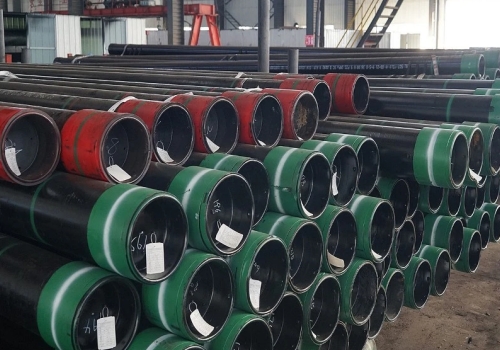
You might wonder if this specific grade fits your next big project. Let me break down the details so you can decide and avoid costly mistakes.
What Are the Key Specifications of a P110 Casing Pipe?
Finding the wrong pipe size ruins your budget. You need clear details to buy the right materials. Here are the exact numbers you need. A p110 casing pipe comes in outer diameters from 4.5 inches to 20 inches. You can choose different lengths from R1 to R3. It connects using short round, long round, or buttress threads.
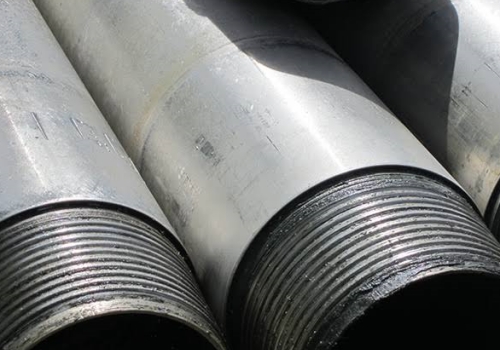
I always tell buyers to look at the exact numbers before they order. You cannot guess when it comes to deep-well drilling. The American Petroleum Institute sets strict rules for these pipes. We follow the API 5CT standard closely to make sure you get exactly what you pay for. The weight of the pipe changes based on the wall thickness and total length. I always double-check these numbers with my clients before shipping. Heavy pipes need proper lifting gear on your site. The steel mixture gives this pipe its tough nature. It includes carbon, manganese, and chromium. We also add nickel and copper. These elements stop rust and wear. A white band on the pipe end helps you spot the P110 material quickly. Our factory handles the heat treating and threading with great care.
Size and Length Details
· R3 length covers 11.58 to 12.8 meters
Main Specification Table
| Feature | Detail |
|---|---|
| Standard | API 5CT |
| Steel Grade | P110 |
| Thread Types | STC, LTC, BTC |
| Length Range | 8 to 13 meters (mostly) |
| Outer Diameter | 4.5 to 20 inches |
How Does P110 Compare to Other Pipe Grades?
Weaker pipes crack under deep ground stress. You lose time and money replacing them. P110 stands out because of its high yield strength. P110 is much stronger than J55, K55, N80, and L80 grades. It has a minimum yield strength of 758 MPa and a tensile strength of 862 MPa. This makes it the top choice for high-stress drilling jobs.
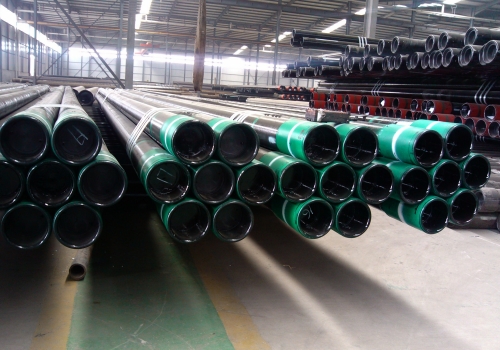
You want to know why you should pick P110 over a cheaper J55 or L80 pipe. I have seen buyers try to save money with lower grades. They often regret it when the pipe cracks under pressure. P110 belongs to API 5CT Group 3. It is the only grade in this group for a very good reason. This massive jump in strength means P110 can handle heavy pressure. The rock formations push hard against the pipe. P110 pushes back. I always recommend checking the hardness limits too. We do strict lab tests to make sure every batch meets these high marks. If your well goes deep, you cannot risk using Group 1 or Group 2 pipes.
Strength Differences
· N80 reaches up to 758 MPa
· P110 starts at 758 MPa and goes up to 965 MPa
Mechanical Properties Table
| Grade | Min Yield Strength (MPa) | Min Tensile Strength (MPa) |
|---|---|---|
| J55 | 379 | 517 |
| L80 | 552 | 655 |
| N80 | 552 | 689 |
| P110 | 758 | 862 |
What Are the Real Benefits and Testing Standards?
Bad pipes cause oil leaks and accidents. You risk your whole operation. Strict testing keeps your project safe and running smoothly. We use P110 casing to line the wellbore and stop it from collapsing. It contains high-pressure fluids and resists rust. We test every pipe using ultrasonic scans, magnetic particles, and hydrostatic pressure to ensure perfect safety. When you buy a pipe, you are really buying peace of mind. I know how much pressure you face to keep costs low but quality high. Let us look at what this pipe actually does underground. You can think of casing as a pipe pile that holds the earth back. It protects your entire investment. We do not just trust the steel blindly. Every single pipe goes through tough tests. The outer surface cannot have any cracks, creases, or scabs. If we find a defect, we remove it. The cut depth must never pass 12.5% of the wall thickness. Your threads must be perfectly smooth. No burrs. No tears. A bad thread means a bad connection, and that ruins the whole well.
Main Uses in the Field
· Supports the wellbore against falling rock
· Isolates different underground zones
· Contains oil and drilling mud safely
· Fights off rust in harsh chemical areas
Strict Inspection Steps
· Visual check of the surface and threads
· Magnetic particle and ultrasonic tests
· Hydrostatic pressure checks
· Charpy impact and flattening tests
Frequently Asked Questions About P110 Pipes?
You probably still have a few questions before you buy. Clear answers help you make fast decisions. Here are the most common things people ask me. People often ask about the difference between casing and tubing, length limits, and thread types. Casing supports the hole, while tubing pumps the oil. We offer custom lengths and all standard API threads to match your needs. I talk to purchasing managers every day. They all ask similar questions about their pipeline needs. I collected the most common ones here to save you time. Read through these carefully so you know exactly what to ask when you place your next order.
Common Questions and Answers
Q: What is the main difference between casing and tubing?
A: Casing goes in first to hold the well wall in place. It takes the heavy dirt and rock pressure. Tubing goes inside the casing. You use the tubing to actually pump the crude oil or gas up to the surface.
Q: How do I know I am looking at a P110 grade?
A: Look at the end of the pipe. The API standard requires a white color band painted on the P110 material. This makes it easy to spot in a busy warehouse.
Q: Can I get lengths shorter than the standard R1 to R3?
A: Yes. While the free length is usually 8 to 13 meters, we can supply pipes shorter than 6 meters. However, these short pipes will make up no more than 20% of your total order.
Q: What thread options do you offer for the connections?
A: We provide Short Thread Connection (STC), Long Thread Connection (LTC), and Buttress Thread Connection (BTC). We also offer special clearance couplings if your project needs them.
Conclusion
A p110 casing pipe offers unmatched strength for deep-well jobs. At Finego Steel, we supply top-quality pipes tested for safety. Contact us today to order your reliable pipeline materials.
- Prev : What exactly is an astm a671 efw pipe and why do you need it?
- Next : No matching information found
- No.101 Wanbo 1st Road, Nancun Town, Panyu District, Guangzhou, Guangdong, China
- 0086-020-84886013,84886093,84886091,84886012
- sales@finegosteel.com
We use cookies and other tracking technologies to improve your browsing experience on our website, to show you personalized content and targeted ads, to analyze our website traffic, and to understand where our visitors are coming from,This behavior is in compliance with the user consent policy.