
 Language
- No.101 Wanbo 1st Road, Nancun Town, Panyu District, Guangzhou, Guangdong, China
- 0086-020-84886013,84886093,84886091,84886012
- sales@finegosteel.com
- Complaints & Suggestions : suggest@finegosteel.com


Product News
What exactly is an astm a671 efw pipe and why do you need it?
Date:2026-10-27
Cold weather destroys weak pipes. You face leaks and project delays. We show you how the right pipe solves low-temperature pressure problems. An astm a671 efw pipe is an electric fusion welded steel pipe made from pressure vessel quality plate. We use it for atmospheric and lower temperatures. It resists cracking in cold environments down to -45°C.
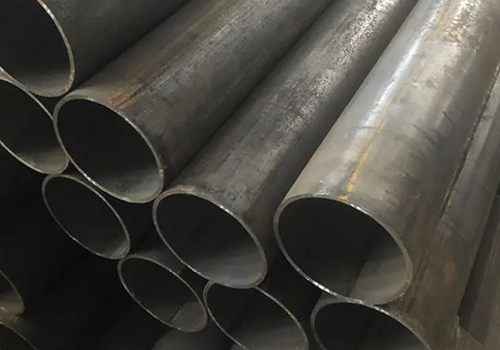
You might wonder how to pick the correct class and grade for your next project. I will explain the details below. If you choose the wrong specifications, you risk safety failures. Let us look at the core details.
What are the key specifications of an astm a671 efw pipe?
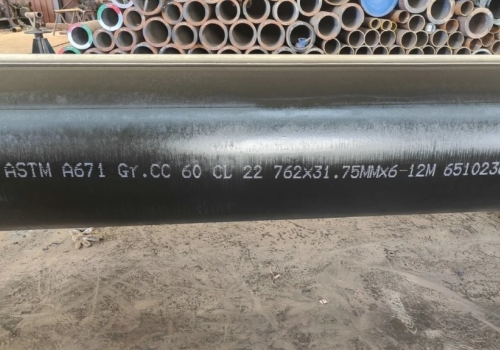
Confusing pipe specs cause costly buying mistakes. You buy the wrong grade, and inspectors reject it. Read our guide to clear up the confusion. The astm a671 efw pipe comes in outer diameters from 16 to 72 inches. Wall thickness ranges from 6.4 to 50.8 mm. Common carbon steel grades include CC60, CC65, and CC70, alongside classes like CL12 and CL22.
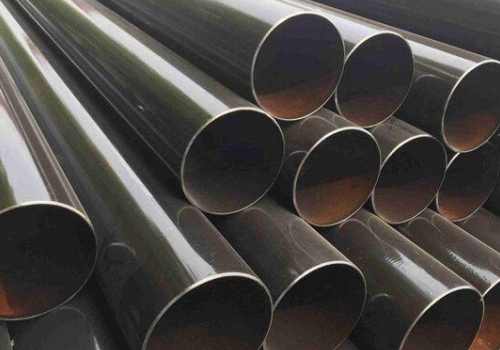
I often see buyers get stuck on the numbers. I recall a client who ordered CL12 when they really needed CL22 for stress relief. We had to rush a new order to fix the mistake. Let me break down the numbers so you buy the right material the first time.
Understanding common grades
The grade number tells you the minimum yield strength. For example, CC60 means 60 ksi (around 415 MPa). We commonly supply carbon steels like CC60, CC65, and CC70. We also provide nickel steels like CF66 for special cold needs. You pick the grade based on your pressure limits.
Class numbers explained
The class number defines the heat treatment and testing. The last digit tells you about the radiography and pressure test rules.
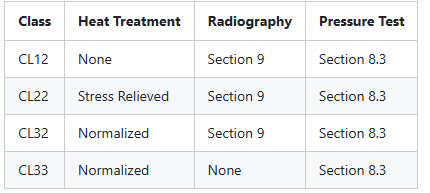
You save money when you know the exact class you need. You do not overpay for extra heat treatments or tests you do not require. We help you match the class to your local building codes.
How do chemical composition and strength affect this pipe?
Weak materials break under pressure. You lose money on repairs and safety incidents. We help you understand the chemistry that keeps pipes strong. Carbon gives the pipe its basic strength. Manganese improves toughness. Silicon removes oxygen during steel making. Sulfur and phosphorus stay low to stop the steel from becoming brittle in cold weather.
Once, an engineer asked me why his old pipes cracked in the winter. I looked at his old material report. The sulfur was too high. High sulfur causes cold brittleness. We supplied him with new Finego Steel plates that had strict chemical limits.
Chemical limits for carbon steel
Every element has a job. We check the pressure vessel steel plate before making the pipe. Here is what you will find in standard grades.
| Grade | Carbon max % | Manganese % | Silicon % | Phosphorus max % | Sulfur max % |
|---|---|---|---|---|---|
| CC60 | 0.21 | 0.79–1.30 | 0.13–0.45 | 0.035 | 0.035 |
| CC65 | 0.24 | 0.79–1.30 | 0.13–0.45 | 0.035 | 0.035 |
| CC70 | 0.27 | 0.79–1.30 | 0.13–0.45 | 0.035 | 0.035 |
Mechanical strength targets
You need pipes that hold their shape under pressure. Yield strength is the point where the metal starts to bend permanently. Tensile strength is the maximum stress before it breaks.
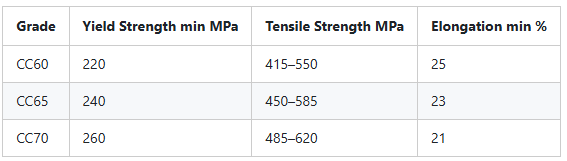
These numbers guarantee your project stays safe. We test every batch to hit these exact targets.
How do we manufacture and test these steel pipes?
Hidden weld flaws cause huge disasters. You worry about pipeline bursts. We use strict welding and testing to give you total peace of mind. We form steel plates into tubes using a multi-step process. Then we weld them using electric fusion welding. We perform mandatory hydrostatic tests on every pipe and use radiography on the welds to find hidden defects.
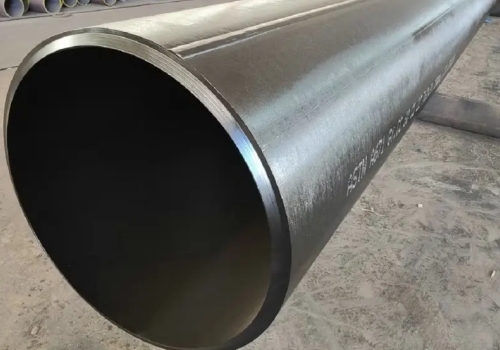
I walked through our Finego Steel factory last week. I watched the machine press heavy steel plates. We call this the JCOE process. It stands for J-shape, C-shape, O-shape, and Expand. It is amazing to see flat steel turn into a massive tube safely.
The forming and welding steps
First, we press the plate into an open tube. Next, we use the electric fusion welding (EFW) process to seal the seam. We control the electric current, voltage, and speed very tightly. Good control means a perfect weld seam that will not crack.
Strict testing procedures
You cannot trust a weld just by looking at it. We use machines to see inside the metal. This lowers your risk of future leaks.
| Test Type | What It Checks | Mandatory or Optional |
|---|---|---|
| Hydrostatic Test | Water pressure holds | Mandatory for each pipe |
| Radiography (RT) | Hidden weld cracks | Mandatory for certain classes |
| Charpy V-Notch | Low-temperature impacts | Optional based on temp |
When we apply high water pressure, we prove the pipe will not fail in your facility. We take no shortcuts on safety because your reputation depends on it.
Where do you use this pipe and how does it differ from others?
Using the wrong pipe standard ruins your system. You face compliance fines and redesigns. We compare standards so you pick the right one easily. You use this pipe mainly for low-temperature environments like liquefied gas lines and chemical storage. It differs from A672 because A672 is for high temperatures. It differs from A106 because A106 is a seamless pipe.
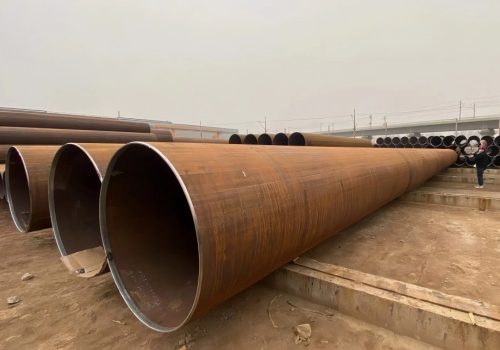
Clients often ask me if they can swap A671 for A672. I always say no. I once saw a contractor try to use A672 for a freezing gas line to save time. We stopped them just in time. The metal would have failed in the cold.
Key differences to know
· Manufacturing style: Standard A106 is a seamless pipe. We make A671 as a welded pipe from plates. The weld gets strict tests to match seamless strength.
· Cost benefits: Welded pipes cost less to make in large diameters than seamless pipes.
Common industrial applications
You will see our pipes in many extreme places. They handle freezing conditions perfectly.
· Cryogenic liquefied gas (LNG) pipelines
· Petroleum refining equipment
· Chemical plant piping systems
· Air separation units
· Power plant cold water systems When your project faces cold weather, this pipe is your best defense against cracked metal and system shutdowns.
Frequently asked questions about astm a671 efw pipe?
Unanswered questions block your buying process. You waste time searching for simple answers. We gathered the top buyer questions to save your time. Buyers often ask about the differences between carbon grades, impact testing rules, and welding methods. We answer these directly below to help you finalize your material planning quickly and accurately.
I get emails every day with similar questions from project managers. I want to make your job easier. Here is a clear list of answers to help your purchasing decisions.
Top buyer questions answered
Q: What is the difference between CC60 and CC65 grades?
A: The number shows the minimum tensile strength. CC60 means 60 ksi. CC65 means 65 ksi. CC65 gives you slightly higher strength. You choose based on your design pressure.
Q: Do we always need impact testing for this standard?
A: No. We only perform the Charpy V-notch impact test when your service temperature requires it. We usually test it at -45°C to check for cold brittleness.
Q: What welding process do we use?
A: We use the electric fusion welding method. We form the plate into a tube and weld it. Then we test the weld with x-rays to make sure it is perfect.
Q: Can I use this pipe for hot steam lines?
A: We do not recommend it. You should use A672 for high-temperature applications. A671 is strictly for atmospheric and lower temperatures.
Conclusion
Choosing the right astm a671 efw pipe keeps your cold-weather projects safe and under budget. Contact Finego Steel today to get high-quality pipes for your next big pipeline job.
- Prev : Centerway Steel to Exhibit at ADIPEC 2026 in Abu Dhabi: Meet Us at Hall 15, Booth 15330
- Next : No matching information found
- No.101 Wanbo 1st Road, Nancun Town, Panyu District, Guangzhou, Guangdong, China
- 0086-020-84886013,84886093,84886091,84886012
- sales@finegosteel.com
We use cookies and other tracking technologies to improve your browsing experience on our website, to show you personalized content and targeted ads, to analyze our website traffic, and to understand where our visitors are coming from,This behavior is in compliance with the user consent policy.