
 Language
- No.101 Wanbo 1st Road, Nancun Town, Panyu District, Guangzhou, Guangdong, China
- 0086-020-84886013,84886093,84886091,84886012
- sales@finegosteel.com
- Complaints & Suggestions : suggest@finegosteel.com


Product News
What Exactly Are Low Temperature Carbon Steel Pipe Flanges and How Do You Choose Them?
You struggle with frequent pipeline leaks. These leaks cost your company thousands of dollars. I will help you fix this expensive problem today. Carbon steel flanges are vital pipe connection parts. They contain between 0.05% and 2.1% carbon. They give you strong and affordable joints for industrial systems. They match almost any service condition.
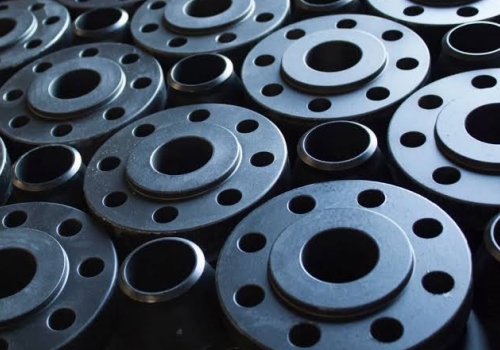
You want to stop replacing broken parts every month. I will guide you through the exact steps to choose the best materials for your piping systems.
Which Steel Grades Work Best for Your Flanges?
You select a weak steel grade for your project. The pipe breaks under heavy pressure. I can show you the correct grades to use safely. The most common grades include ASTM A36 for mild steel and ASTM A105 for forged steel. You also need low temperature carbon steel pipe flanges for freezing environments. These grades dictate maximum pressure limits.
Understanding Carbon Steel Grades
I remember my early days in the construction industry. I bought standard ASTM A105 flanges for a harsh winter project. The cold weather made the steel brittle. The piping system failed during our initial testing. I learned a very hard lesson that day. You must match the steel grade to your exact environment. Mild carbon steel works well for basic structural needs. It has good ductility. It welds easily. Medium carbon steel offers higher strength for pressure piping. It handles elevated temperatures well. But you face a big problem in extreme cold. You must use low temperature carbon steel pipe flanges for these conditions. These specific flanges resist cracking in freezing weather. They keep your pipeline safe and secure. I always double-check the carbon content before I approve a purchase order. Higher carbon means more strength. It also means less weldability. You must balance these physical properties carefully.
| Steel Type | Common Grade | Carbon Content | Best Application |
|---|---|---|---|
| Mild Carbon | ASTM A36 | 0.05% - 0.29% | Low-pressure, structural |
| Medium Carbon | ASTM A105 | 0.30% - 0.35% | High-temp pressure piping |
| Low Temp Carbon | ASTM A350 LF2 | 0.30% max | Freezing environments |
Which Flange Types Connect Your Pipes Safely?
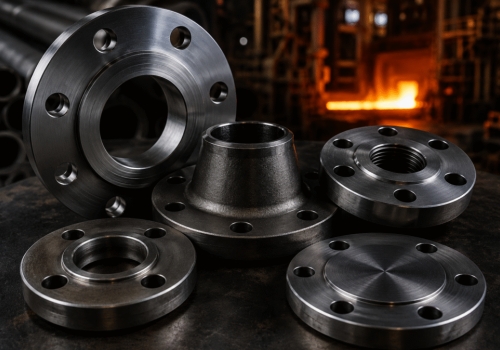
Incorrect connections cause major fluid spills. You face huge cleanup bills afterward. We must select the proper flange type right now. You can pick weld neck, slip-on, or blind flanges. Weld neck types handle extreme pressure safely. Slip-on types fit basic general service well. Blind flanges close off the end of your pipeline completely.
Matching Flange Types to Your Needs
I often walk through large construction sites. I inspect the pipe connections closely. You can tell a lot about a project by its flanges. I once saw a young contractor use threaded flanges for a high-pressure line. The joints leaked almost immediately. I told his team to use weld neck flanges instead. Weld neck flanges butt-weld directly to the pipe. They provide the absolute strongest joint for critical service. You should use slip-on flanges for lower pressure needs. They slide over the pipe very easily. Welders weld them on the inside and the outside. This dual welding saves installation time. I also use blind flanges frequently in my projects. They have no center hole at all. I use them to seal off pipelines during routine maintenance. Socket weld flanges work extremely well for small pipes. You must understand how each type connects. This basic knowledge prevents costly field repairs later.
| Flange Type | Connection Method | Pressure Suitability |
|---|---|---|
| Weld Neck | Butt-welded to pipe | High pressure |
| Slip-On | Fillet welded inside and out | Low to moderate pressure |
| Blind | Bolted to close a line | All pressure classes |
| Threaded | Screwed onto pipe | Low pressure |
How Do Carbon Steel Flanges Compare to Alloy Steel?
Expensive alloy steel drains your project budget quickly. You waste money on unneeded material features. I have a much cheaper solution for you. Carbon steel costs less and works perfectly for standard industrial uses. Alloy steel costs more and resists extreme heat. You only need alloy steel when your temperatures exceed 800 degrees Fahrenheit.
Managing Your Material Costs
I talk to project engineers every single day. They often specify alloy steel by default. I always challenge this expensive choice. Alloy steel contains expensive chromium and nickel. These elements add high corrosion resistance. They also double the final material cost. I review the service conditions first. Carbon steel handles most water lines easily. It handles gas lines well. It provides excellent strength at a very low price. You just need to apply a good surface coating. This coating stops basic rust. I save my company thousands of dollars. I do this by switching to carbon steel whenever possible. Of course, carbon steel loses strength above 300 degrees Fahrenheit. You must use alloy steel for extreme heat. You must also prepare for extreme cold. I always source quality low temperature carbon steel pipe flanges for our winter builds. They perform just as well as expensive alloys in cold weather. You must match the material to the exact need.
| Feature | Carbon Steel | Alloy Steel |
|---|---|---|
| Added Elements | None | Chromium, Nickel |
| Max Temperature | 800°F (425°C) | Over 1200°F |
| Corrosion Resistance | Low | High |
| Cost | Low | High |
What Must You Check Before You Buy Flanges?
Ordering wrong parts delays your entire construction schedule. Your workers stand around waiting. I will help you order your parts correctly. You must verify the service pressure and pipe dimensions first. You must choose the right face type like a raised face. You should always ask for certified mill test reports from your supplier.

Following a Strict Buying Checklist
I have purchased pipeline equipment for 18 years. I follow a strict checklist for every single order. You cannot guess the technical specifications. You must read the piping codes carefully. ASME B31.3 governs most process piping systems. It requires specific materials for strict compliance. I always check the dimensional standard first. ANSI B16.5 covers pipe sizes up to 24 inches. I also verify the flange face type. A raised face seals better for high pressure. A flat face prevents damage when you connect to cast iron parts. You must also find a reliable supplier. I trust Finego Steel for all my major projects. Finego Steel provides high-quality pipeline products consistently. They deliver certified mill test reports with every shipment. These reports prove the chemical makeup of the steel. I buy my low temperature carbon steel pipe flanges from them. They always meet international safety standards. You must build a strong relationship with a good supplier.
| Checklist Item | Why You Need to Check It |
|---|---|
| Service Conditions | Determines the correct steel grade |
| Dimensional Standard | Ensures the flange fits your pipe |
| Face Type | Dictates how the joint seals |
| Mill Test Reports | Proves the steel quality and chemistry |
Conclusion
You can build safe and cost-effective pipelines with the right carbon steel flanges. You just need to check your grades, match your types, and buy from reliable steel suppliers.
FAQ
Q: What exactly are carbon steel flanges?
A: Carbon steel flanges are durable pipe connection parts. They contain 0.05% to 2.1% carbon. They provide strong joints for industrial piping systems.
Q: What is the main difference between carbon steel and stainless steel flanges?
A: The main difference is basic corrosion resistance. Stainless steel contains chromium to stop rust entirely. Carbon steel costs less but requires a protective coating to prevent rust.
Q: Which steel grade should I use for cold weather?
A: You must use specific low temperature carbon steel pipe flanges. ASTM A350 LF2 is a common grade. This grade prevents the steel from cracking in freezing temperatures.
Q: Why do you need certified mill test reports?
A: Mill test reports prove the exact chemical makeup of the steel. They verify the mechanical properties. They guarantee the flange meets your specific project safety codes.
- No.101 Wanbo 1st Road, Nancun Town, Panyu District, Guangzhou, Guangdong, China
- 0086-020-84886013,84886093,84886091,84886012
- sales@finegosteel.com