
 Language
- No.101 Wanbo 1st Road, Nancun Town, Panyu District, Guangzhou, Guangdong, China
- 0086-020-84886013,84886093,84886091,84886012
- sales@finegosteel.com
- Complaints & Suggestions : suggest@finegosteel.com


Product News
How to choose the exact industrial elbow for your piping project?
Piping systems fail when you pick the wrong fittings. You face leaks and high replacement costs. I will show you how to select the perfect elbow for your projects. An industrial elbow changes the direction of fluid in a pipe. You choose the right one by checking the bend angle, the radius length, and the connection type. Materials like carbon steel or stainless steel must match your system pressure and the fluid type to work well.
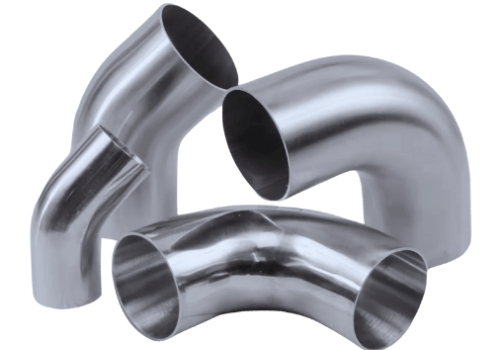
I have seen many projects stop because of wrong pipe parts. You do not want to make this mistake. Let us look closely at the choices you have.
What are the common bend angles for an industrial elbow?
Pipe routes rarely go straight. A bad angle choice blocks fluid and harms the system. You must know the standard angles to keep your flow smooth. The most common industrial elbow angles are 90 degrees, 45 degrees, and 180 degrees. A 90-degree elbow makes a sharp turn. A 45-degree elbow makes a soft turn. A 180-degree elbow makes the flow go back in the same direction.
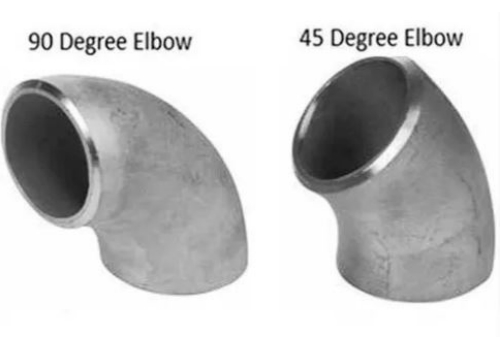
I work at Finego Steel. I help many EPC buyers find the right parts. I often see buyers buy a 90-degree elbow when they really need a 45-degree elbow. This causes big problems later. The 90-degree industrial elbow is the most popular choice. It fits easily into building corners and steel structures. We call it a vertical elbow. It is great for tight spaces. But it creates more pressure drop because the fluid hits the wall hard. You must account for this pressure loss in your system design. The 45-degree elbow is the second most common choice. It creates less friction. The fluid moves faster. You use it in chemical plants and water supply lines. It saves energy. The 180-degree elbow is very different. It turns the flow around completely. We use it mostly in heater coils and heat exchangers. It creates very low pressure. You can only use it in systems with low turbulence. You must match the steel material to the angle and the fluid. Here is a simple guide to help you compare these angles quickly.
| Angle | Main Use | Flow Friction | Space Need |
|---|---|---|---|
| 90 Degree | Standard corners | High | Small |
| 45 Degree | Gentle turns | Low | Medium |
| 180 Degree | Return systems | Very High | Large |
What does long radius and short radius mean for your elbow?
Space limits often ruin piping plans. If your elbow is too big, it will not fit. You need to understand radius options to solve space problems safely. Long radius (LR) elbows have a centerline radius equal to 1.5 times the pipe diameter. Short radius (SR) elbows have a radius equal to 1.0 times the pipe diameter. LR elbows offer better flow. SR elbows fit into very tight and small spaces.
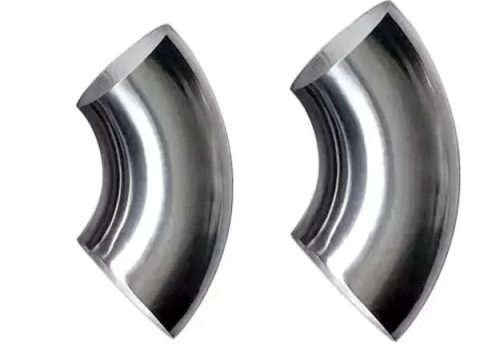
When I worked on a big chemical plant project last year, the engineers made a mistake. They ordered long radius elbows for a very small pump room. The pipes did not fit at all. We had to rush order short radius elbows. This delay cost a lot of money. I always tell my clients at Finego Steel to measure their space first. Short radius elbows sometimes cost more because they are special orders. A long radius industrial elbow is always the first choice if you have enough room. The fluid moves smoothly through the pipe. It causes less wear and tear on the metal. It extends the life of your whole system. We use LR elbows for high-pressure systems. A short radius elbow is different. The turn is very sharp. This sharp turn creates more friction. The fluid wears down the metal faster inside the pipe. We only use SR elbows when the physical space is too small for an LR elbow. It is a big compromise. You should use them mainly in low-pressure systems.
| Radius Type | Centerline Radius | Fluid Flow | Space Required | Best For |
|---|---|---|---|---|
| Long Radius (LR) | 1.5 x Diameter | Very Smooth | Large | High pressure |
| Short Radius (SR) | 1.0 x Diameter | High Friction | Small | Tight spaces |
Which connection type is best for your industrial elbow?
A weak pipe joint will leak under high pressure. This puts your whole factory at risk. You must match the connection type to your system pressure levels. You can connect an industrial elbow in three ways. Butt weld elbows are welded directly to the pipe ends. Socket weld elbows have a recessed area to hold the pipe. Threaded elbows screw onto the pipe without welding. Butt weld is the strongest option. I spend a lot of time talking with installation teams. They all have different favorites. The butt weld elbow is the absolute standard for large pipes. You weld the edge of the pipe to the edge of the elbow. This creates a very strong and permanent bond. It handles very high pressure safely. It is safe for dangerous chemicals. Most of our oil and gas clients buy this type. You need skilled welders to install them. Socket weld elbows are for smaller pipes. You slide the pipe into a socket in the elbow. Then you weld around the outside. It is easier to line up than a butt weld. We see this a lot in small power plant lines. Threaded elbows do not need welding at all. You just twist them on. They are very fast to install. But they are not as strong. They can leak if the pressure gets too high. We suggest threaded elbows for basic water lines or air lines. At Finego Steel, we keep all these types in our warehouse. Here is how you can choose.
| Connection | Pipe Size | Strength | Welding Needed | Best Use |
|---|---|---|---|---|
| Butt Weld | Large | Very High | Yes | Oil and gas |
| Socket Weld | Small | High | Yes | Small pressure lines |
| Threaded | Small | Low | No | Water and air |
Conclusion
Choosing the right industrial elbow requires checking the angle, radius, and connection style. The correct choice ensures safe flow and saves you money on your piping projects.
- No.101 Wanbo 1st Road, Nancun Town, Panyu District, Guangzhou, Guangdong, China
- 0086-020-84886013,84886093,84886091,84886012
- sales@finegosteel.com