
 Language
- No.101 Wanbo 1st Road, Nancun Town, Panyu District, Guangzhou, Guangdong, China
- 0086-020-84886013,84886093,84886091,84886012
- sales@finegosteel.com
- Complaints & Suggestions : suggest@finegosteel.com


Product News
How to accurately measure the length of a longitudinal welded steel pipe?
Incorrect pipe lengths cause project delays. Rework wastes your budget and time. We will show you the exact ways to measure pipe length and fix this problem. You can measure the length of a longitudinal welded steel pipe using four main methods: the grating ruler method, the camera method, the encoder method, and the improved encoder method. Each method offers different levels of accuracy, cost, and speed for construction and EPC projects.
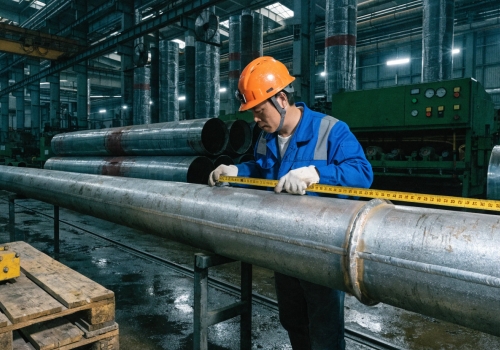
Measuring pipes seems simple, but small mistakes cause big problems on the job site. You need accurate data to keep your EPC projects on track. Let us look at the specific methods to get the right numbers every time.
What is the grating ruler method for a longitudinal welded steel pipe?
Dust and vibration ruin exact measurements. Bad data hurts your pipeline design. The grating ruler method gives high precision, but you must know its limits. The grating ruler method uses two fixed-length grating rulers on the outside of the longitudinal welded steel pipe. A rodless cylinder drives the rulers at both ends. It measures the length using light interference. This gives very high accuracy for your projects.
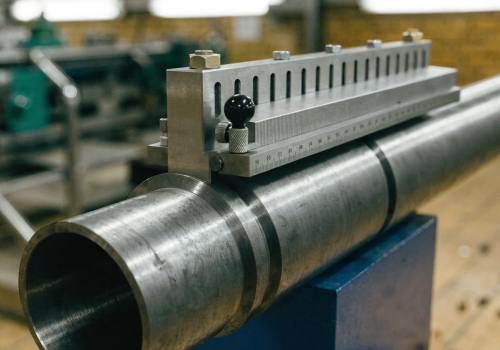
When I first started sourcing pipes for big construction projects, I noticed that precision is everything. The grating ruler method is great, but we must think about the real-world factory environment. Factories are loud, dusty, and full of heavy machines.
Pros and Cons of Grating Rulers
This method is very sensitive. It uses light waves to find the exact length. If you need a perfect fit for a critical pipeline, this is a top choice. However, the grating rulers cost a lot of money. They are also hard to maintain. Dust from the factory floor can block the light. Big machines cause vibrations that shake the rulers and give bad readings. I remember one time when a small dust particle ruined a whole batch measurement. The workers had to clean the room and start over. This cost us two days of work.
| Feature | Details | Impact on your project |
|---|---|---|
| Accuracy | Very High | Perfect fit for tight spaces |
| Cost | High | Takes more of your budget |
| Maintenance | Difficult | Needs clean air and steady ground |
| Best Use | Clean environments | Good for final quality checks |
How does the camera measurement method work for steel pipes?
Slow manual checks delay production lines. Waiting for pipes hurts your delivery time. Camera measurement speeds up the process by checking pipes as they move. The camera method uses equidistant photoelectric switches on one side and a camera with a light source on the other. It takes a picture as the pipe passes. The system calculates the length based on the image position and the switches without stopping the pipe.
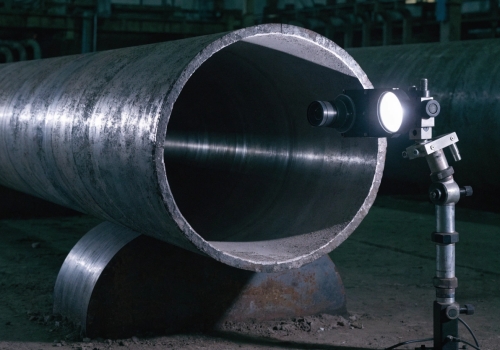
I like the camera method because it saves time. When I visit a factory, I see pipes moving fast on rollers. Stopping each pipe to measure it takes too long. Camera measurement happens online. You get the length data instantly without stopping the workflow.
Dealing with Light and Errors
This method is smart but not perfect. The biggest problem is light. If the factory has big windows, the sun can shine on the pipes. This external light tricks the camera. To fix this, factories use special light sources. I once saw a factory try to measure pipes near an open door. The afternoon sun hit the metal. The camera read the pipe as much shorter than it really was. We had to reject the data. There is also another issue. The ends of the pipe are often chamfered for welding. The chamfered ends reflect the special light very strongly. This high brightness can cause reading errors on the computer screen.
| Issue | Cause | Solution |
|---|---|---|
| External light | Factory windows | Use a special dark box or strong light source |
| Bright pipe ends | Chamfered metal | Adjust camera exposure settings |
| Speed | Moving rollers | Use fast cameras to capture the image |
Why use the encoder method to measure pipe length?
Complex software systems break down often. Broken systems stop your pipe supply. The encoder method offers a mechanical and reliable way to measure pipe lengths. The encoder method installs an encoder on a cylinder. The cylinder pushes the steel pipe on a roller table towards photoelectric switches. The system reads the encoder data to calculate the cylinder stroke. This stroke length gives you the total length of the pipe.
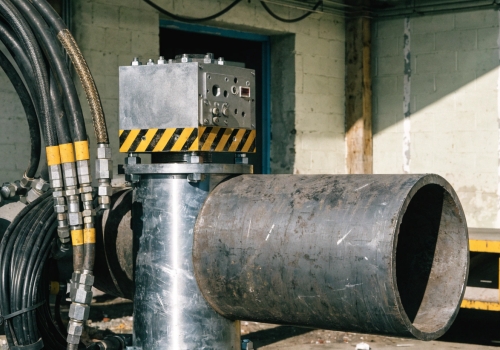
Engineers often ask me for simple solutions. The encoder method is very physical. I trust it because you can see it working. The cylinder physically moves the pipe. The encoder tracks how far the cylinder moves.
Lifting and Detecting the Pipe
However, this method needs extra steps. To get a good reading, the machine must lift the steel pipe during the measurement. Lifting heavy pipes takes energy and time. During a factory tour last year, I watched the cylinder push a massive pipe. It was very loud. The lifting mechanism broke down halfway through the day. We had to wait for repairs before we could check the pipe lengths. Also, the photoelectric switches can sometimes make small mistakes. If the switch detects the pipe a little too early or too late, the final length will be wrong.
| Step | Action | Potential Risk |
|---|---|---|
| 1 | Cylinder pushes pipe | Mechanical wear over time |
| 2 | Machine lifts pipe | Uses extra power and time |
| 3 | Switch detects end | Small detection errors |
| 4 | Encoder calculates | Needs careful calibration |
Is the improved encoder method the best choice for EPC projects?
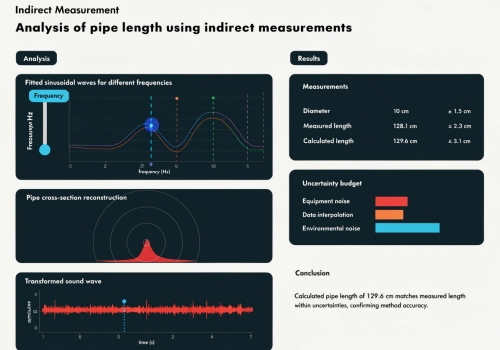
Big pipes and messy sites make measuring hard. Bad measurements lead to fitting problems on site. The improved encoder method solves this by using indirect measurement. The improved encoder method measures the distance between the pipe ends and fixed reference points. This indirect method avoids the heavy pipe volume and support platforms. It is easy to operate, giving an accuracy of less than ±10 mm and a repeatability of ≤5mm.
When I buy materials for large construction projects, I need a simple and strong method. The factory floor is a complex environment. The pipes are huge and heavy. Standard measuring tools cannot easily cross the large support platforms under the pipes.
Indirect Measurement for Heavy Pipes
The improved encoder method changes the game. Instead of trying to measure the whole pipe directly, it measures the empty space. It measures from a zero point to the pipe end on both sides. Then, it uses simple math to find the pipe length. This method is very stable. It ignores the dust, the heavy weight, and the complex platforms. I visited a site last month that used this exact setup. The workers did not have to lift anything. They just read the computer screen. The numbers matched my CAD drawings perfectly.
| Method | Accuracy | Repeatability | Operation |
|---|---|---|---|
| Normal Encoder | Needs lifting | Average | Hard |
| Improved Encoder | Less than ±10 mm | ≤ 5 mm | Easy |
For a one-stop supplier like Finego Steel, this method is very useful. It gives us fast, reliable numbers. When you use CAD to design your pipeline, you can trust these numbers. It saves costs and makes your job much easier.
Conclusion
Measuring a longitudinal welded steel pipe correctly ensures your project runs smoothly. By choosing the right measurement method, Finego Steel delivers perfect pipes to save you time and money.
- No.101 Wanbo 1st Road, Nancun Town, Panyu District, Guangzhou, Guangdong, China
- 0086-020-84886013,84886093,84886091,84886012
- sales@finegosteel.com