
 Language
- No.101 Wanbo 1st Road, Nancun Town, Panyu District, Guangzhou, Guangdong, China
- 0086-020-84886013,84886093,84886091,84886012
- sales@finegosteel.com
- Complaints & Suggestions : suggest@finegosteel.com


Product News
What makes a high pressure steel pipe essential for your industrial projects?
Date:2026-08-13
Struggling with dangerous pipeline leaks? Extreme industrial environments demand flawless materials. If your current pipes fail under stress, your entire project faces costly and hazardous delays. A high pressure steel pipe is a seamless conduit crafted from carbon, alloy, or stainless steel to handle extreme pressures of 10 to 100 MPa. We use them in high-risk setups like boilers and petrochemical plants to guarantee system safety.
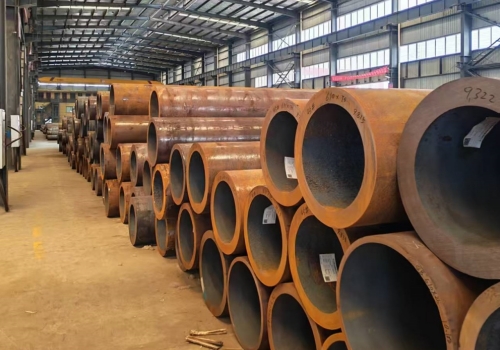
I remember sourcing materials for a critical power plant back in 2015. We learned the hard way that choosing the wrong pipe specifications leads to massive budget overruns. Keep reading so you can avoid these expensive mistakes.
How do manufacturing methods impact high pressure steel pipe quality?
Worried about hidden internal pipe defects? Weak structural integrity easily leads to catastrophic blowouts. Picking the wrong manufacturing process exposes your entire pipeline to immense danger. Manufacturers produce these pipes using hot rolling for large diameters and cold drawing for precise, smaller sizes. Both methods rely on strict heat treatments and non-destructive testing to ensure the final product withstands intense stress without rupturing.
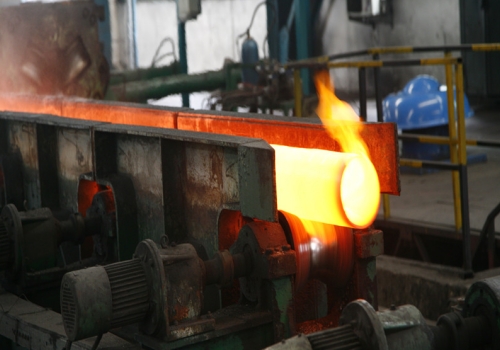
To truly understand how these pipes survive extreme conditions, we must look at their production journey. In my 18 years of sourcing materials, I always audit a manufacturer's heat treatment process. It is the only way to ensure the steel achieves a high-strength tempered martensite structure.
Hot rolling versus cold drawing
You need to choose the right method based on your specific project parameters. Hot rolling is ideal for massive industrial pipelines, while cold drawing fits precision equipment.
| Feature | Hot Rolled Pipes | Cold Drawn Pipes |
|---|---|---|
| Outer diameter | 22 to 530 mm | 10 to 108 mm |
| Wall thickness | 2.0 to 70 mm | 2.0 to 13 mm |
| Primary use | Main transportation lines | Precision equipment |
| Cost impact | More economical for bulk | Higher cost per meter |
Core production steps
Every reliable pipe goes through a rigorous path before it reaches your site.
· Applying heat treatment (quenching and tempering) to build toughness.
· Running non-destructive testing like ultrasonic and eddy current checks.
· Conducting high-pressure hydrostatic tests to confirm safety. If a supplier skips the ultrasonic test, walk away. I once rejected a whole batch of pipes because the supplier failed to provide the hydrostatic test reports. You must always demand full documentation.
What are the core challenges of installing high-pressure piping systems?
Frustrated by flange leaks during pressure tests? Poor installation techniques waste your time and ruin expensive materials. Improperly fitted joints will inevitably cause dangerous system failures. Proper installation demands absolute precision. You must use formal pipe supports, keep sealing surfaces completely clean, and tighten flange bolts symmetrically. Installers must never use forceful pulling or pushing to compensate for alignment errors.
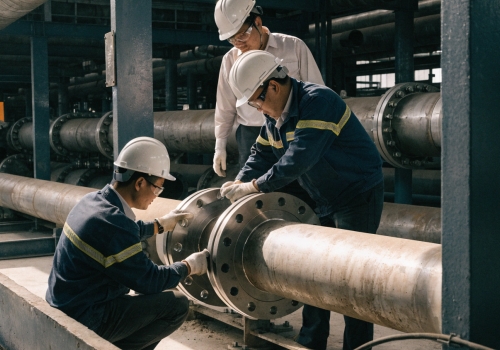
A high pressure steel pipe is only as strong as its weakest joint. These systems transport highly dangerous media, often exceeding temperatures of 600°C. When you combine high heat with toxic gases, a single installation error becomes a disaster.
Main components of the system
Your pipeline is a complex engineering setup. It requires high-quality components working perfectly together.
· Seamless pipe bodies to withstand internal stress.
· Forged fittings like elbows and tees to eliminate weak weld seams.
· Heavy-duty valves with strict sealing designs.
· Weld neck flanges paired with spiral wound gaskets.
Major installation risks to avoid
During a major facility upgrade in 2019, I saw a contractor try to force two misaligned flanges together. We stopped the work immediately. Forceful pulling creates secondary stress that leads to fatigue cracks.
· Never scratch the radial sealing surface of a flange.
· Always apply molybdenum disulfide grease to threaded ends.
· Use exact flexibility analysis to plan for thermal expansion.
· Install protective sleeves on supports to stop vibration damage. Following standards like ASME B31.3 ensures your system handles thermal expansion and vibration without failing.
What are the most frequently asked questions about high pressure steel pipes?
Confused by complex pipeline regulations? Misunderstanding technical specifications ruins your purchasing budget. Getting clear answers to your pressing questions prevents costly sourcing mistakes immediately. Buyers constantly ask us about material selection, pressure ratings, and international standards. Clear answers help you choose the correct pipes, stay within budget, and keep your engineering projects running safely on schedule.
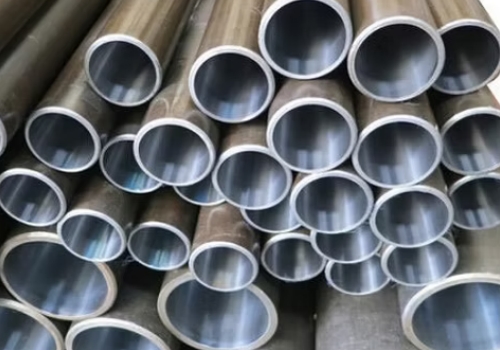
Sourcing the right materials involves filtering through a lot of technical noise. To make your job easier, I have gathered the most common questions my clients ask before placing a large order.
Q: How much pressure can these pipes actually handle?
A: Standard high-pressure pipes operate safely between 10 and 100 MPa. For extreme applications, custom wall thicknesses can push this limit higher, provided they pass strict hydrostatic testing at the factory.
Q: Which materials work best for high-temperature environments?
A: We recommend low-alloy heat-resistant steels like 15CrMoG or high-strength alloy steels like P91. These materials maintain their mechanical properties even when temperatures exceed 500°C.
Q: Does galvanizing help high-pressure pipes?
A: Yes, but you must be careful. Galvanizing improves corrosion resistance. However, the operating temperature must remain below 250°C. For complex shapes, you should use an alkaline plating solution to prevent hydrogen embrittlement.
Q: How do I verify the quality of a pipe before buying?
A: Always ask for the material test report. You need to see proof of ultrasonic testing, exact chemical composition, and yield strength data. If the manufacturer cannot provide this, you should find a new supplier.
Conclusion
Choosing the right high pressure steel pipe ensures project safety and longevity. If you need reliable materials, contact Finego Steel today to get your customized, high-quality piping solutions!
- No.101 Wanbo 1st Road, Nancun Town, Panyu District, Guangzhou, Guangdong, China
- 0086-020-84886013,84886093,84886091,84886012
- sales@finegosteel.com
We use cookies and other tracking technologies to improve your browsing experience on our website, to show you personalized content and targeted ads, to analyze our website traffic, and to understand where our visitors are coming from,This behavior is in compliance with the user consent policy.