
 Language
- No.101 Wanbo 1st Road, Nancun Town, Panyu District, Guangzhou, Guangdong, China
- 0086-020-84886013,84886093,84886091,84886012
- sales@finegosteel.com
- Complaints & Suggestions : suggest@finegosteel.com


Industry News
ASTM A1085 vs ASTM A500: Which Steel Tube Should You Choose?
Date:2026-10-09
Struggling to pick the right steel grade? The wrong choice wastes money and risks safety. We will help you select the best hollow structural section for your project. The main difference in astm a1085 vs astm a500 is performance. ASTM A500 serves as the standard, widely available choice for general construction. ASTM A1085 offers a single, higher-performance grade with tighter wall thickness tolerances, making it better for seismic and dynamic loads.
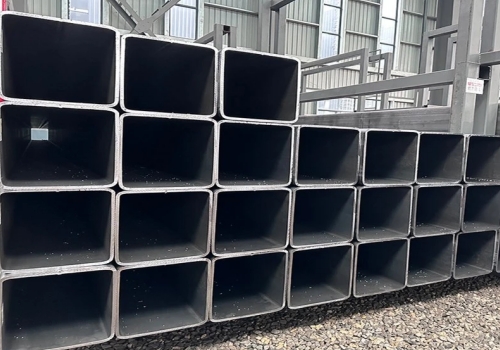
Do not let slight grade differences confuse you. Read on to see the exact numbers and facts that will guide your buying decision and keep your project moving forward.
What Are the Core Differences Between ASTM A1085 and ASTM A500?
Confused by material specs? Using the wrong steel grade ruins structural integrity. Let us look at the exact technical differences so you can buy with confidence. ASTM A500 features four grades (A, B, C, D) and requires a 10% wall thickness reduction in design. ASTM A1085 has one single grade, strict mass rules, and lets you use the full nominal wall thickness. It also caps the maximum yield limit.
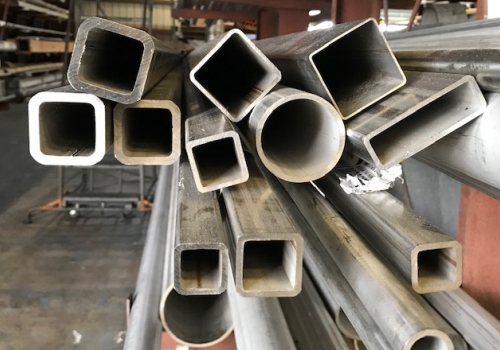
Let us dig into the real numbers. Over my 18 years in the construction supply industry, I see many buyers get stuck on the wall thickness rules. This is where ASTM A1085 truly shines compared to ASTM A500.
Key Technical Specifications
· Wall thickness tolerances
· Production methods
· Toughness testing standards When you use ASTM A500, North American design codes force you to reduce the nominal wall thickness by 10%. This happens because A500 has a loose mass tolerance. ASTM A1085 fixes this exact problem. It enforces stricter mass and thickness rules during production. Because of this, engineers can use the full 100% nominal wall thickness in their designs. This means you can often buy a lighter, thinner tube to do the exact same job. Also, A1085 sets a maximum yield strength. This capped yield offers a huge benefit for seismic capacity design. Open-ended yield strengths in A500 make earthquake-resistant designs much harder to calculate. At Finego Steel, we ensure our production lines meet these strict tolerances perfectly. We hold ISO 9001 and CE certifications to guarantee the quality of every single pipe we produce.
Specification Comparison Table
| Feature | ASTM A500 | ASTM A1085 |
|---|---|---|
| Grades | Four (A, B, C, D) | Single grade |
| Design Wall | Reduced by 10% | Full 100% nominal wall |
| Yield Strength | Minimum only | Minimum and maximum capped |
| Production | Seamless and welded | Welded only |
| CVN Toughness | Not standard | Optional supplement |
How Do ASTM A1085 vs ASTM A500 Compare in Cost and Application?
Worried about blowing your budget? Overpaying for steel hurts your profit margins. We break down the cost and usage differences to save you money. ASTM A500 costs less and has high availability for general buildings. ASTM A1085 costs more upfront but saves money in heavy structures, bridges, and seismic zones. You can use lighter sections to meet the exact same strict engineering requirements.
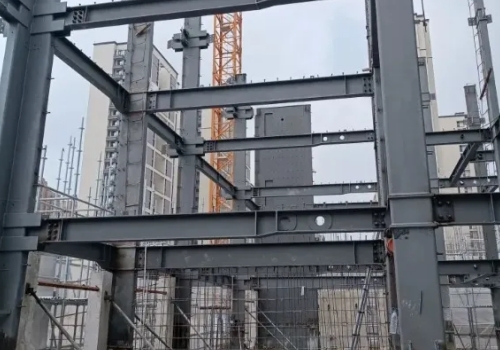
As a purchasing manager, you always want to balance price with performance. You cannot just look at the price per ton. You must look at the total project cost.
Where to Use Each Grade
· General building columns
· Bridge construction frameworks
· Seismic force-resisting systems
· Offshore oil platforms ASTM A500 remains the volume leader in the market. If your project uses standard columns, braces, or frames, stick with A500. It offers the broadest availability. You will find it easily, and the base price stays low. The light-wall product space also remains A500 territory. This is because A1085 starts at a heavier minimum wall of 0.148 inches (3.8 mm). But ASTM A1085 carries a price premium for a good reason. Last year, I worked with a contractor building a large stadium in a seismic zone. They initially wanted to use standard steel to save money. I showed them the math. By switching to the newer A1085 standard, they used thinner walls and saved 12% on total material weight. This reduced their shipping costs and made the installation much faster. For dynamically loaded members or earthquake zones, A1085 acts as the clear winner. Make this decision during the design phase. Retrofitting material choices at procurement rarely works.
Cost and Application Breakdown
| Aspect | ASTM A500 | ASTM A1085 |
|---|---|---|
| Initial Cost | Lower base price | Higher premium price |
| Availability | Excellent and high stock | Moderate, check early |
| Best Applications | Standard buildings and light walls | Bridges, seismic and heavy loads |
FAQ: Common Questions About ASTM A1085 vs ASTM A500?
Still have doubts about these standards? Unanswered questions lead to costly buying mistakes. Read our direct answers below to clear up any confusion quickly. People often ask if they can substitute these grades. You cannot simply swap them. A1085 has strict toughness and yield limits that A500 lacks. Always ask your engineering team before you change the specified steel grade on your purchase order.
When our clients at Finego Steel send us inquiries, they usually ask the same practical questions. Here are the direct answers you need to make smart buying choices for your next big project.
Q: Can I use A500 if the design asks for A1085?
No. A1085 has a capped maximum yield strength and strict wall thickness rules. If you swap to A500, the structure might fail during an earthquake because A500 does not control the maximum yield limit.
Q: Does A1085 come in seamless tubes?
No. ASTM A1085 only covers cold-formed welded carbon steel. If you need seamless tubes, you must look at ASTM A500 or other specific seamless piping standards.
Q: What is the Charpy V-Notch (CVN) supplement?
This is a physical test that measures the toughness of the steel at cold temperatures. A1085 offers this test as an option. It proves the steel can absorb energy without breaking. This acts as a critical safety feature for bridges and winter construction. A500 does not offer this as a standard option.
Q: How can Finego Steel help me with my order?
We operate as a professional pipeline equipment company. We provide first-class production capabilities for large diameter, heavy thickness, and high-strength pipes. We ship globally and ensure you get the exact grade your project demands.
Conclusion
Choosing between astm a1085 vs astm a500 depends on your structural needs. For premium, cost-saving Hollow Structural Sections, contact Finego Steel today and let us build together.
- Prev : Centerway Steel Welcomes International Clients for a Closer Look at Our Capabilities and Commitment
- Next : No matching information found
- No.101 Wanbo 1st Road, Nancun Town, Panyu District, Guangzhou, Guangdong, China
- 0086-020-84886013,84886093,84886091,84886012
- sales@finegosteel.com
We use cookies and other tracking technologies to improve your browsing experience on our website, to show you personalized content and targeted ads, to analyze our website traffic, and to understand where our visitors are coming from,This behavior is in compliance with the user consent policy.